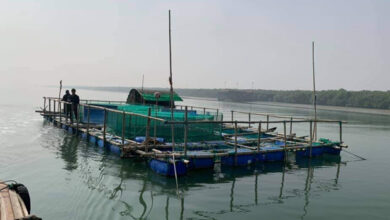
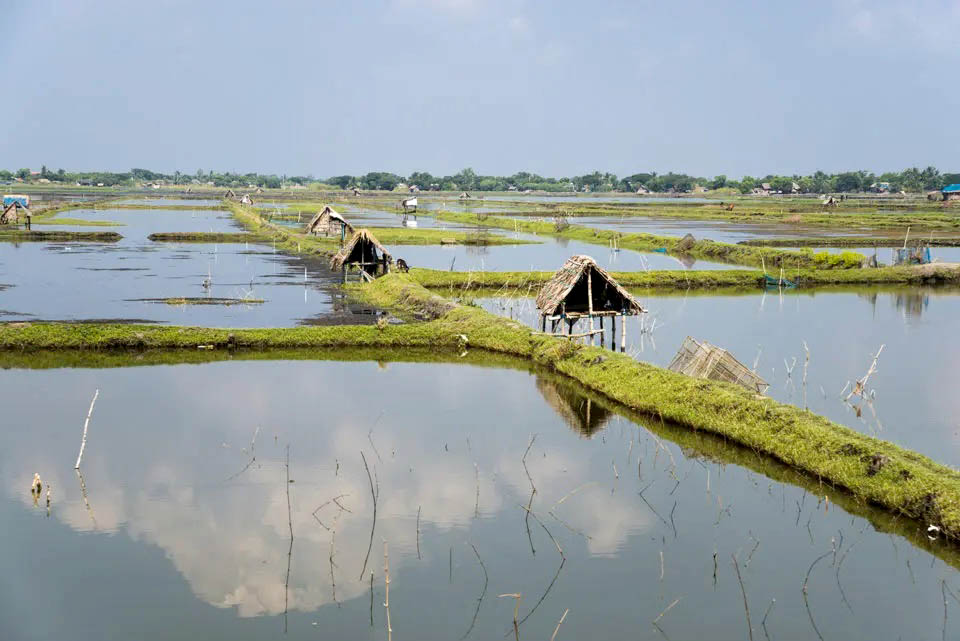
As global demand for aquatic protein continues to rise, Bangladesh has emerged as one of the world’s major aquaculture producers, ranking among the leading countries in global farmed-fish production. The country recorded a national fish production of 4.91 million metric tons in 2022–2023, with aquaculture contributing approximately 58.03% (2.85 million MT) of total fish output.
Aquaculture is also central to Bangladesh’s food and nutrition security. Farmed fish contributes around 60% of daily animal protein intake, while coastal shrimp farming plays an important role in the country’s export economy, accounting for more than 1% of national export value and approximately 76% of fishery export earnings.
Yet the next phase of growth cannot depend simply on producing more fish. Climate change, disease outbreaks, market volatility, environmental degradation, weak extension services, and social inequalities are creating significant challenges. Aligning Bangladesh’s aquaculture sector with the United Nations Sustainable Development Goals (SDGs) is therefore increasingly important for ensuring long-term productivity, market competitiveness and social and environmental sustainability.
The Dual Reality of Coastal Shrimp Farming
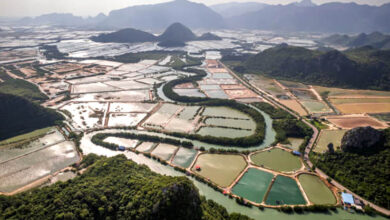
Coastal shrimp farming illustrates both the opportunities and structural challenges facing Bangladesh’s aquaculture sector.
In the southwest coastal districts of Satkhira and Bagerhat, farmers have reported significant difficulties in maintaining profitability. Recent studies found that 97% of surveyed farmers in Satkhira and all surveyed farmers in Bagerhat expressed dissatisfaction with declining production and profitability over the past decade. In Bagerhat, 57% of farms reportedly experience extremely frequent disease outbreaks, while inadequate water-exchange infrastructure, including insufficient inlet and outlet sluice gates, further increases production risks.
The situation differs considerably in Cox’s Bazar, where 97% of surveyed farmers expressed satisfaction with increasing production and profitability. Larger farm sizes, relatively higher educational attainment and better access to water have been identified among the factors associated with this difference.
These regional contrasts demonstrate that Bangladesh’s aquaculture sector does not face a single, uniform set of challenges. Infrastructure, farm size, water management, technical knowledge and access to services can significantly influence farm performance.
Market structure presents another major challenge. Smallholder farmers frequently lack direct links with processing facilities and remain dependent on intermediaries. Price volatility and product-quality concerns, including allegations of illegal jelly injection to artificially increase shrimp weight, can further undermine consumer confidence and the reputation of Bangladeshi seafood in international markets.
Perhaps most importantly, many coastal farmers report receiving limited or no regular extension services, training or monitoring from government agencies and development organizations. This communication gap can slow the adoption of improved technologies, disease-management practices and international production standards.
Turning Ecological Risks into Opportunities
The environmental costs of poorly managed aquaculture expansion are equally significant. Historically, the expansion of extensive shrimp farming in coastal areas has been associated with mangrove conversion, biodiversity loss, soil salinization and the discharge of untreated wastewater containing nutrients and chemical residues.
Mangrove destruction also has implications for climate change. Mangrove ecosystems store substantial quantities of blue carbon, meaning that their degradation can reduce carbon-storage capacity and release previously stored carbon.
Sustainable aquaculture therefore needs to move beyond the conventional objective of maximizing short-term production.
Integrated Mangrove-Shrimp Farming and IMTA
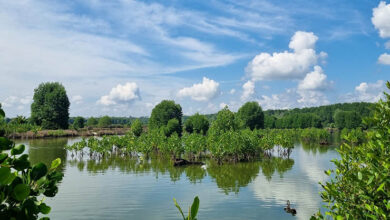
There is already evidence of farmer awareness regarding the relationship between mangrove ecosystems and shrimp production. Studies report that 97% of farmers in Satkhira and 77% in Cox’s Bazar recognize the benefits of mangroves for shrimp farming.
Integrating mangrove conservation or restoration with shrimp production could provide multiple benefits, including habitat protection, carbon storage and increased coastal resilience.
Similarly, Integrated Multi-Trophic Aquaculture (IMTA) offers an opportunity to make better use of aquaculture waste. By combining species occupying different trophic levels for example, fish or shrimp with seaweeds and bivalves IMTA can recycle nutrients and reduce the environmental burden of aquaculture effluent.
Recirculating Aquaculture Systems
Recirculating Aquaculture Systems (RAS) provide another pathway toward more controlled and resource-efficient production. Properly designed systems can recycle a very high proportion of water, reducing water consumption and limiting the release of untreated effluent into surrounding ecosystems.
For Bangladesh, RAS could be particularly relevant for hatcheries, high-value species and urban or peri-urban aquaculture where land and water availability are constrained. However, high capital and energy requirements mean that RAS should be adopted selectively and based on species, market and production economics.
Biofloc and Aquaponics
Biofloc technology can convert nitrogenous waste into microbial biomass, allowing farmers to recover nutrients within the production system while potentially reducing water exchange and feed-related costs.
Aquaponics can similarly combine fish production with plant cultivation, creating opportunities for efficient water and nutrient use, particularly in small-scale and land-constrained production systems.
Sustainable Aquafeeds
Feed is one of the most important environmental and economic components of aquaculture. Reducing excessive dependence on fishmeal derived from wild-caught fish could decrease pressure on marine resources.
Alternative ingredients including plant proteins, single-cell proteins and black soldier fly larvae are increasingly being investigated as components of sustainable aquafeeds. Bangladesh can benefit from further research into locally available, nutritionally appropriate and economically viable feed ingredients.
Aquaculture as a Driver of Social Development
The contribution of aquaculture extends well beyond production statistics. Fisheries and aquaculture support millions of livelihoods across Bangladesh and can contribute directly to poverty reduction, food security, health and rural economic development.
Poverty Reduction and Rural Livelihoods
The fisheries sector supports approximately 17 million livelihoods in Bangladesh. For small-scale fish farmers, aquaculture can provide an important source of household income and employment, particularly where alternative livelihood opportunities are limited.
However, income statistics should be interpreted alongside production costs, household size, indebtedness and income variability. Increasing aquaculture production alone does not automatically guarantee equitable poverty reduction.
Nutrition and Public Health
Aquaculture can also contribute to improved dietary diversity. Small indigenous fish species (SIS), when incorporated into household-level production systems, can provide important micronutrients, including iron, zinc, calcium and vitamin A, particularly for vulnerable groups such as women and children.
Increased household income from aquaculture can additionally improve access to health services. Studies from several farming communities have reported high proportions of aquaculture households using formal healthcare services.
Water and Sanitation
Higher household income may also enable investment in sanitation and drinking-water infrastructure. For example, research in Feni reported that 96% of fish-farming households used pucca sanitary latrines, while more than 93% had access to safe drinking water through private tube wells.
These outcomes illustrate how productive aquaculture can contribute indirectly to broader SDG targets when increased income translates into household investment.
A Strategic Roadmap for a Sustainable Seafood Economy
Bangladesh now faces a critical opportunity: to move from a production-oriented aquaculture model toward a resilient, inclusive and higher-value seafood economy.
Four areas deserve particular attention.
1. Strengthen Extension Services at the Local Level
Department of Fisheries extension services should be strengthened closer to farming communities, including at union level where feasible. Farmers need regular technical support on disease prevention, biosecurity, water-quality management, farm management and internationally recognized good aquaculture practices.
2. Introduce Better Coastal Land-Use Planning
Coastal aquaculture expansion should be guided by spatial planning and zoning. Such planning can help reduce conflicts between shrimp farms, agriculture, settlements, wetlands and mangrove ecosystems while creating space for community-based integrated aquaculture and mangrove-restoration models.
3. Strengthen Market Integrity and Traceability
Bangladesh needs stronger mechanisms for seafood traceability, quality assurance and product integrity. Tackling adulteration, improving farm-to-market traceability, reducing excessive dependence on intermediaries and expanding value-added processing could help producers capture a greater share of the final market value.
4. Make Decent Work and Equal Pay Part of Aquaculture Policy
A sustainable seafood economy must also be socially sustainable. Equal pay, occupational safety, fair contracts and access to training should become integral components of aquaculture and seafood-processing policies. Improving working conditions for women and other vulnerable workers would contribute directly to SDG 5 and SDG 8.
Looking Toward 2030
Bangladesh’s aquaculture sector has already demonstrated its ability to contribute to food security, employment, exports and rural development. The challenge now is to ensure that future growth does not come at the expense of coastal ecosystems, smallholder farmers or workers.
The path toward 2030 should therefore focus not simply on how much fish Bangladesh produces, but also on how that fish is produced, who benefits from the value chain, and what environmental costs are generated along the way.
A transition toward climate-resilient farming, sustainable feeds, integrated production systems, stronger extension services, responsible coastal planning, transparent seafood markets and gender-equitable employment could allow Bangladesh to capture greater economic value while advancing multiple SDGs simultaneously.
The future of Bangladesh’s aquaculture industry will ultimately depend on balancing productivity with sustainability, economic growth with equity, and technological innovation with ecological responsibility.