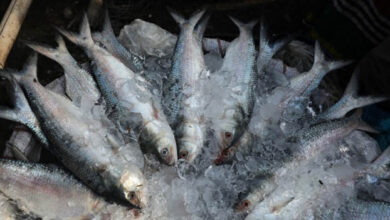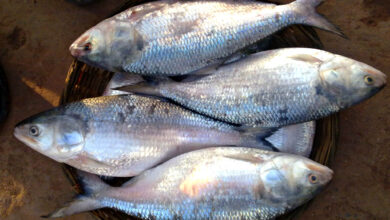

Walk into any local kitchen market in Chandpur or Dhaka’s Karwan Bazar, and the air around the fish stalls feels incredibly heavy. For us in Bangladesh, hilsa (ilish) isn’t just grocery; it’s an emotion and the center of our cultural identity. Because of this deep attachment, our demand for it is what we studied in introductory economics as highly inelastic-we crave it no matter what. But the reality is depressing. I recently ran a casual, person-to-person survey across several local markets in both Noakhali and Chandpur, talking to ordinary middle and lower-income families about their food budgets. A huge majority told me they haven’t bought a proper, full-sized hilsa in the last three to four years because they have been completely priced out. When asked who is to blame, everyone blurted out the exact same phrase: “the syndicate.” The public firmly believes greedy wholesalers hoard fish in cold storage to artificially choke supply and rob the common man.
As an economics student at Noakhali Science and Technology University (NSTU), I felt there had to be more to the story than just blanket blame on a hidden cartel. I collected retail price data for large hilsa (1 kg+) from the Department of Agricultural Marketing (DAM) and the Bangladesh Trade and Tariff Commission (BTTC), covering the period from 2016 to 2026.The numbers don’t show a temporary glitch; they show a brutal, decade-long structural crisis.
| Year Period | Price Range (BDT/kg) | Representative Average | Increase from Previous Period | Approx. % Increase |
| 2016–17 | Tk 800 – Tk 1,200 | Tk 1,000 | — | — |
| 2018–19 | Tk 1,200 – Tk 1,400 | Tk 1,300 | Tk 300 | 30.0% |
| 2020–21 | Tk 1,300 – Tk 1,600 | Tk 1,450 | Tk 150 | 11.5% |
| 2022–23 | Tk 1,600 – Tk 2,000 | Tk 1,800 | Tk 350 | 24.1% |
| 2024–25 | Tk 2,200 – Tk 2,800 | Tk 2,500 | Tk 700 | 38.9% |
| 2026 | Tk 2,600 – Tk 3,500 | Tk 3,050 | Tk 550 | 22.0% |
The Reality of River Fishing: Skyrocketing Sourcing and Operational Costs
The pure micro scenario of catching a fish has changed drastically. Going out into the water has become a massive financial gamble. A standard fishing trip requires upfront cash for thousands of liters of expensive diesel, tons of ice, heavy nylon nets, and basic food rations to keep a crew of fifteen to twenty men alive at sea or river for a week. Since diesel prices have shot up over the last few years, these basic production costs have practically doubled. If a boat comes back to the ghat with a tiny catch, those fuel bills don’t disappear. To survive, the boat owners have to charge a high base price right at the wholesale docks just to cover their costs.
Destruction of Rivers: The Severe Impact of Illegal Sand Mining
But why are the catches in our rivers dropping so fast? The fishermen on the ground gave me a major reason that city consumers completely ignore: illegal sand mining (অবৈধ বালু উত্তোলন). For years, powerful local networks have been using heavy dredgers to extract sand uncontrollably at the confluence of the Padma and Meghna rivers, right around Chandpur and surrounding areas. This constant dredging completely ruins the natural depth of the rivers and creates hidden shoals and underwater sandbanks all over the place. On top of that, the water becomes incredibly muddy, which kills off the plankton that hilsa feed on. Hilsa is a highly sensitive, migratory fish that needs deep, clean, fast-flowing water to travel upstream and lay eggs. Because our rivers are polluted, fish are staying in the deep sea instead of coming back.Traditional fishermen can no longer get a good harvest near the riverbanks with cheap boats. They are forced to travel deep into the marine waters of the Bay of Bengal, which burns vastly more fuel and automatically inflates the final price of the fish
District Price Gaps and the Market Racket of ‘Chandpur Fraud’
This river crisis has also created a weird market dynamic where prices differ wildly by district, leading to a lot of cheating. Hilsa caught in the sweet, fresh waters of Chandpur is the most expensive because the environment makes the fish retain a high fat content, giving it that legendary rich taste. “Marine hilsa from Chittagong or Cox’s Bazar has much less fat, tastes distinctly saltier, and is way cheaper, while fish from districts like Bhola and Noakhali fall somewhere in the middle,” a fisherman explained in an interview. This price gap has given rise to a massive racket in city markets known as the ‘Chandpur Fraud’ tactic. Dishonest retail traders buy cheap sea hilsa from Chittagong, bring it to the city, sprinkle river water over it to give it a fresh gloss, and swear to customers that it just arrived fresh from Chandpur’s Boro Station. They use this information asymmetry to sell a lower-tier fish at an ultra-premium price.
Drowning in the Dockside Debt Trap: The Exploitative Dadon System
But the most tragic part of the whole real market scenario is the Dadon system a predatory, informal credit loop. Most marginalized fishermen are completely broke and don’t have the collateral to get a formal bank loan. This forces them to take advance loans (dadon) from local moneylenders and wholesalers (Arotder) to fund their trips. The terms are brutal: in exchange for the cash, the fishermen are locked into selling their entire catch back to that specific moneylender at a pre-determined, dirt-cheap price – often 30% to 50% below the actual market rate. This structural inequality means that even when retail prices are hitting 3,000 BDT in Dhaka, the actual fisherman sees zero profit margin.
Fisherman Survival vs. Protecting Egg-Bearing Mother Hilsa
This absolute poverty forces them into a desperate corner during the government’s seasonal fishing bans. Biologically, catching an egg-bearing Mother Hilsa (Ma Ilish) is disastrous because a single mature fish can carry up to 2 million eggs. Crushing them right before they spawn ruins the future fish stock. But when a fisherman’s family is starving and loan sharks are threatening them, long-term environmental conservation becomes a luxury they can’t afford. The government’s current compensation of 40 kg of rice during the 22-day breeding ban doesn’t cover rent, medicine, or school fees. Out of pure survival instinct, these men take the ultimate midnight gamble, heading into protected waters with illegal fine-mesh Current Jal to catch whatever they can just to get through the month.
Policy Fixes: Breaking the Trap and Supporting River Fishermen
If we ever want to see hilsa return to the plates of ordinary families, our policymakers need to realize that conducting random mobile court raids in urban retail markets is a superficial fix. It won’t lower fuel costs, it won’t clean the Meghna, and it won’t free a single fisherman from a loan shark. The government needs to step in at the root level. First, there must be a zero-tolerance crackdown on illegal river sand mining to restore our water channels. Second, the central bank needs to introduce collateral-free micro-loans specifically for registered fishermen to break the Dadon trap. Third, the safety nets during bans must be upgraded to include direct cash transfers of at least 3,000 to 5,000 BDT alongside the rice allocation. Finally, providing fuel and ice subsidies for registered boats at the local ghats would directly bring down sourcing costs. Until we fix the environmental and economic rot at the very bottom of the chain, the hilsa will remain an elite luxury, and the true crisis will stay hidden behind the myth of the market syndicate.
Pretom Dhali
Student, Department of Economics
Noakhali Science and technology