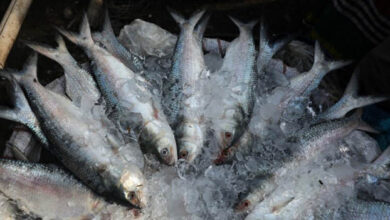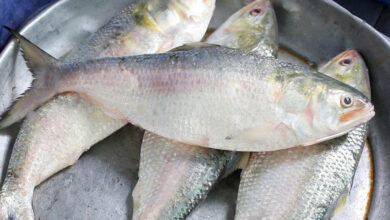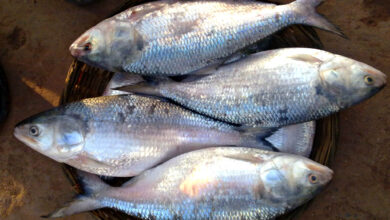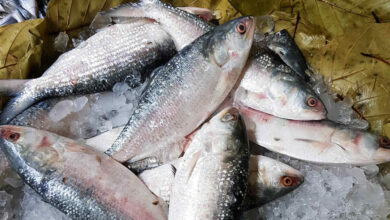
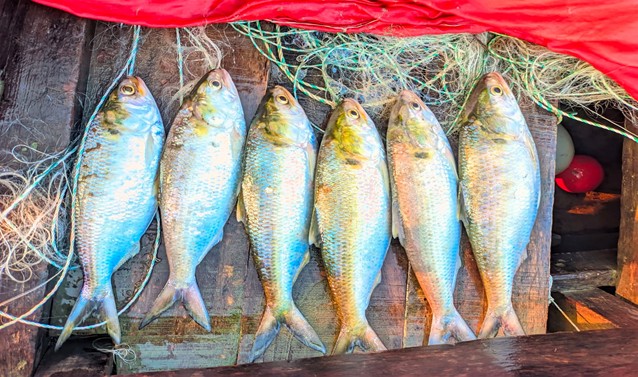
Hilsa (Tenualosa ilisha), our national fish, often described as the “king of fish,” is also a Geographical Indication (GI) product of Bangladesh. Its distribution extends from the Persian Gulf to the Bay of Bengal. Hilsa inhabits marine, brackish-water and freshwater environments across 16 countries, although it is regularly harvested in 11 countries. Among these countries, Bangladesh is the leading producer of hilsa, whereas India is in the second position.
Hilsa makes a significant contribution to the socioeconomic development of Bangladesh. Approximately 10% of the country’s total fish production comes from hilsa, making it one of the country’s most important fish species in terms of production. It is also a major source of livelihood for coastal fishing communities. Approximately 700,000 people are directly, and another 2.5 million people are indirectly involved in hilsa-related activities, including harvesting, processing, transportation and marketing. In FY 2024–25, Bangladesh produced approximately 500,000 metric tonnes of hilsa, according to the Department of Fisheries.
Historically, hilsa has been closely associated with the rivers, estuaries and coastal waters of Bangladesh, giving it a distinctive identity and reputation that is reflected in its GI status. Adult hilsa have a streamlined, laterally compressed body and typically weigh more than 0.7–3+ kg, with a length of about 12–18 inches. They have a distinct keel-like ridge along the belly, called as “Keel Bone”. Females are generally larger than males, and larger females can produce more eggs.
A Journey Between the Sea and the River
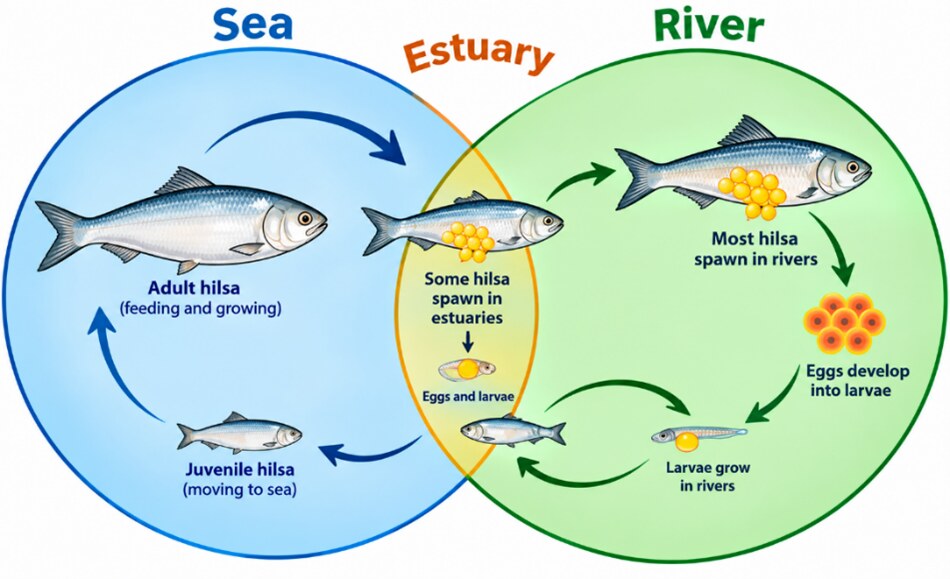
Hilsa has a remarkable life cycle that connects the sea, estuaries and rivers. It primarily grows and feeds in marine and coastal waters, consuming plankton such as diatoms, green algae and blue-green algae, along with small aquatic organisms including copepods, daphnia and other crustaceans. Food availability influences its growth, body condition and fat content.
When mature, hilsa migrate from the sea through estuaries into rivers for spawning. After spawning, the eggs develop into larvae and young hilsa, which grow in river and estuarine environments before gradually moving towards the sea.
In simple terms, the life cycle can be represented as: Sea → Estuary → River → Estuary → Sea
This is not simply a journey from one place to another; it is a continuous ecological cycle essential for the survival of the species.
In Bangladesh, the Meghna, Shahbazpur, Chandpur, Tentulia, Hizla, Mehendiganj, Andharmanik and waters around Sandwip have been identified through research as important hilsa spawning areas. Other spawning grounds may also exist.
A mature female hilsa can release hundreds of thousands to millions of eggs during a spawning event. The number varies according to the size and age of the fish, with studies reporting several hundred thousand to more than two million eggs in some cases. However, millions of eggs do not mean millions of adult fish. Considerable natural mortality occurs between the egg, larval and juvenile stages. Survival depends on water quality, food availability, temperature, predation, pollution and other environmental conditions.
Spawning is influenced by several environmental factors, including water temperature, salinity, depth, current, turbidity, dissolved oxygen, pH and rainfall. Therefore, the presence of a river alone is not sufficient. The river and surrounding habitats must also provide suitable ecological conditions for spawning and migration.
Young hilsa grow in rivers and estuaries before moving towards the sea. Hilsa below 10 inches in length is commonly referred to as Jatka. As they mature, they eventually return to rivers to reproduce.
Where Does the Problem Begin?
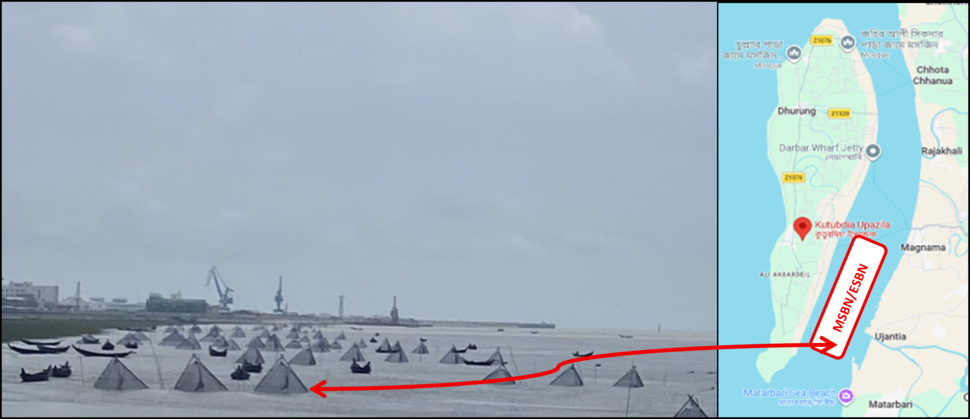
When hilsa populations decline, the problem cannot be attributed to a single location or a single cause. It may occur at different stages of the fish’s life cycle, from spawning grounds and nursery habitats to migration routes and feeding areas in the sea. One of the major pressures is excessive fishing, particularly the capture of juvenile hilsa or jatka before they reach maturity. Fishing gears such as Marine Set Bag Nets (MSBN) and Estuarine Set Bag Nets (ESBN) (Behundi Jal) can capture brood, juvenile and small-sized hilsa, while small-mesh nets may also catch large numbers of different fish species. The loss of mature female hilsa can have another important consequence. When breeding fish are caught before or during spawning, fewer mature individuals remain to produce the next generation. Fishing pressure is not the only concern. Sedimentation, changes in natural water flow, pollution, plastic and other waste, habitat alteration, changes in salinity and temperature, and climate change can also affect migration, spawning and nursery habitats. The ecological conditions that allow hilsa to complete its life cycle must also be maintained.
The Hilsa Highway
What would the ideal migration route of hilsa look like?
We can imagine a vast ecological highway connecting the Bay of Bengal with the rivers of Bangladesh, a natural migration corridor through which hilsa can move safely between feeding, nursery and spawning habitats.
Sea → Coast → Estuary → River → Spawning Ground
This ecological highway should remain as continuous, navigable, naturally flowing and pollution-free as possible. Excessive sedimentation that makes waterways shallow, changes in natural water flow, pollution or habitat degradation can create obstacles along the route. Unlike many freshwater fish such as shol, koi, shing and magur, hilsa depends on a connected marine–estuarine–riverine system to complete its life cycle. Its survival therefore depends on the health and connectivity of these habitats.
The return journey is equally important: River → Estuary → Coast → Sea
Therefore, protecting only adult hilsa is not enough. Conservation needs to consider the entire life cycle, from eggs and larvae to Jatka and mature fish.
From Barishal to Cox’s Bazar and Back
One practical way of visualizing this ecological connection is the Barishal–Cox’s Bazar–Barishal corridor.
This should not be understood as a straight geographical line, but as an interconnected ecological network linking rivers, estuaries, coastal waters, nursery habitats, feeding grounds and spawning areas.
In other words, Bangladesh needs a “River-to-Bay of Bengal Ecological Highway” for hilsa. The highway may have many bends, but it should have no speed breakers like Behundi Jal (MSBN/ESBN).
Why Hilsa Matters to Bangladeshi People
Hilsa is not only a culturally important and delicious fish; it is also a nutritious oily fish. It provides high-quality protein, omega-3 fatty acids, including EPA and DHA and several vitamins and minerals such as vitamins A, D, E and B12, selenium, phosphorus, magnesium and iron.
Its protein provides essential amino acids needed for the formation and maintenance of body tissues. Omega-3 fatty acids are important components of cell membranes and have recognized roles in cardiovascular and brain health. Other nutrients in hilsa contribute to normal bone health, blood formation, nervous-system function and energy metabolism.
Beyond nutrition, hilsa supports a large value chain. Fishers, aratdars, traders, transport workers, ice-factory workers, processors and many others depend directly or indirectly on hilsa-related economic activities. Its importance therefore extends from household nutrition and local livelihoods to the wider national economy.
Protecting the Hilsa Highway
Protecting hilsa requires a coordinated approach. Preventing Jatka fishing, protecting mature and spawning hilsa, reducing excessive fishing pressure and controlling harmful fishing gears are important measures. At the same time, rivers and estuaries need healthy water quality, adequate navigability and natural flow. Spawning grounds, nursery habitats and migration routes also require protection. The future of hilsa depends on keeping this entire ecological system connected.
To protect mother hilsa, the Government of Bangladesh has imposed a 22-day nationwide fishing ban from 8 October to 29 October 2026. During this period, catching, selling, transporting, storing and marketing hilsa are strictly prohibited.
The message is simple: if we want hilsa to continue its journey from the Bay of Bengal to our rivers and back again, we must keep its ecological highway open.
Al Shahriar
Nature Conservation Management (NACOM)
Cox’s Bazar, Bangladesh