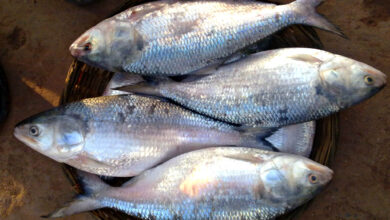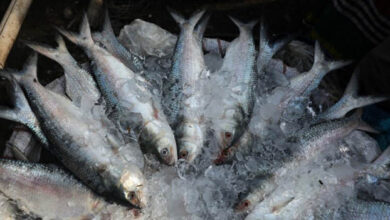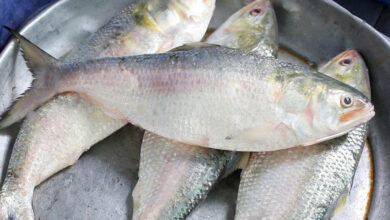
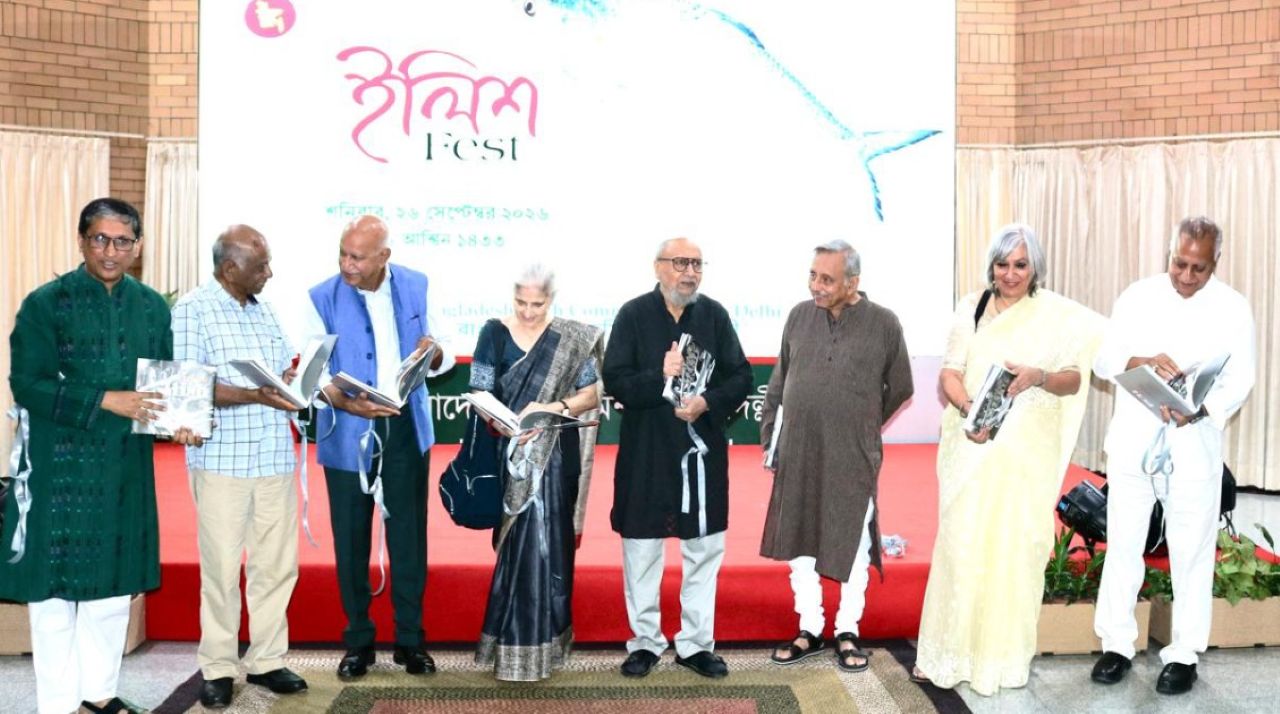
Bangladesh showcased its rich culinary heritage and the cultural significance of hilsa at a special Hilsa Fest held at the Bangladesh High Commission in New Delhi on Saturday.
Organised at Maitree Hall, the event brought together Indian politicians, diplomats, academics, journalists, civil society representatives and cultural figures to celebrate hilsa as one of the strongest symbols of Bengali food culture.
Bangladesh High Commissioner to India M. Riaz Hamidullah highlighted the deep connection between hilsa and Bangladesh’s social, cultural and economic life.
Speaking at the event, he said hilsa remains closely intertwined with the country’s society and economy. He also joined the unveiling of A Fish Called Ilish, a book published in Dhaka that explores the significance of the iconic fish.
Hilsa at the heart of Bangladesh’s food culture
The festival featured a wide selection of Bangladeshi hilsa preparations, alongside other traditional dishes, giving guests an opportunity to experience the diversity of Bangladesh’s cuisine.
Beyond its culinary appeal, the event presented hilsa as part of a much broader cultural tradition. For generations, the fish has been associated with Bengali festivals, family occasions, regional food traditions and everyday life.
The High Commissioner also highlighted Bangladesh’s efforts to conserve and increase hilsa production. The country currently has five designated hilsa sanctuaries, alongside seasonal fishing restrictions and other conservation measures intended to protect breeding and juvenile hilsa.
These initiatives have contributed to improvements in hilsa conservation and production, according to the High Commission.
Cultural diplomacy through food
The event was attended by several prominent Indian personalities, including former Minister of State for External Affairs and journalist M. J. Akbar, former diplomat and politician Mani Shankar Aiyar, human rights activist and social thinker Syeda Hameed, former Indian ambassador Ronen Sen, and social scientist Ashis Nandy.
Guests praised both the food and the organisation of the festival, while the event provided an opportunity to experience Bangladesh’s hospitality and culinary traditions through one of its most recognisable food symbols.
The gathering also demonstrated how food and culinary heritage can serve as a bridge between communities.
Participants expressed hope that initiatives such as the Hilsa Fest would contribute to stronger people-to-people connections between Bangladesh and India, using shared Bengali culinary traditions as a platform for cultural exchange.
For Bangladesh’s seafood sector, the event also underlines the wider cultural and economic importance of hilsa, not simply as a commercially valuable fish, but as an important part of the country’s national identity and culinary heritage.