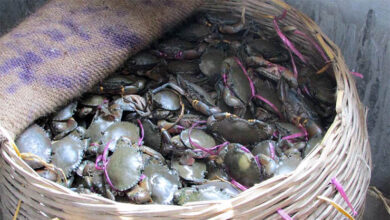
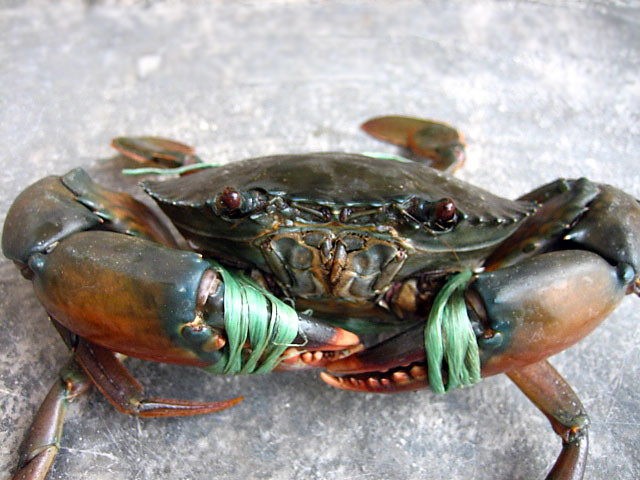
Mud crab farming is becoming an important livelihood option for coastal communities in Bangladesh. With changing salinity conditions creating challenges for traditional agriculture, mud crab (Scylla olivacea) offers an alternative source of income for farmers in suitable coastal areas.
The industry also supports a wider value chain involving crab collectors, farmers, traders, depot operators and exporters. However, its long-term sustainability faces a major challenge: dependence on wild-caught juvenile crabs, which can put pressure on natural populations when harvesting is excessive.
Could better farming practices help address these challenges? A 90-day field trial in Burigoalini Union, Satkhira District, offers an encouraging insight. The study examined how stocking density affects the growth, survival and profitability of hatchery-reared mud crabs in earthen ponds. The study suggests that moderate stocking density can increase mud crab production and profitability while reducing the risks associated with overcrowding.
More Crabs Do Not Always Mean More Profit
The researchers tested three stocking densities: two, four and six crabs per square metre. The juvenile crabs were raised in earthen ponds, provided with sinking feed containing 45% crude protein, and given shelter made from locally available Golpata leaves. The results revealed an important lesson for farmers: overcrowding can reduce both production efficiency and crab quality.
At the highest density of six crabs per square metre, the survival rate dropped to 43.75%, while the average final weight was only 29.53 grams. The researchers also reported a higher rate of injuries, including missing claws and walking legs, which can reduce the marketability of harvested crabs. Competition for food and shelter, along with cannibalism during moulting, may help explain these results.
Why Four Crabs per Square Metre Stood Out
The moderate stocking density of four crabs per square metre delivered the best overall production results in the trial. Crabs stocked at this density reached an average final weight of approximately 49.42 grams, with a survival rate of 62.29%. More importantly, the reported harvest yield reached 873 kilograms per hectare. Around 31% higher than the yield obtained at two crabs per square metre.
The four-crab treatment also recorded the lowest feed conversion ratio, meaning feed was used more efficiently to produce crab biomass.
The economic results followed a similar pattern. The study reported an average net return of US$111.40 per 80-square-metre pond and a benefit-cost ratio of 1.79 for the moderate-density treatment. These figures were higher than those reported for the lower stocking density.
The findings suggest that stocking more crabs can improve returns up to a point, but excessive density may lead to higher losses, smaller animals and reduced feeding efficiency.
Simple Management Practices Matter
Stocking density is only one part of successful mud crab farming. The Satkhira trial also highlights the importance of providing adequate shelter and maintaining suitable pond conditions.
Golpata leaves covered approximately 30% of the pond surface, offering shelter that could help reduce aggressive encounters and protect vulnerable crabs during moulting. Farmers should also monitor water quality, including salinity, temperature, dissolved oxygen and pH, while ensuring that pond boundaries prevent crabs from escaping.
Regularly recording feed inputs, mortality and crab size can help farmers identify problems before they lead to significant financial losses. However, four crabs per square meter should not be treated as a universal recommendation. The best stocking density may vary with pond conditions, season, water exchange, feed quality and the availability of shelter. Further trials in different coastal locations are needed to establish how widely these results apply.
A More Sustainable Future for Mud Crab Farming
Bangladesh’s mud crab sector continues to face the challenge of securing reliable supplies of juvenile crabs without placing excessive pressure on wild populations. Hatchery-produced juveniles could help diversify seed supplies, although their affordability, availability and survival under commercial farming conditions remain important considerations.
Combining reliable hatchery seed with appropriate stocking density and better pond management could help farmers improve production while making more efficient use of feed and other resources.
The message from Satkhira is straightforward: successful mud crab farming is not about stocking as many crabs as possible. It is about finding the right balance between growth, survival, harvest quality and production costs.For coastal farmers in Bangladesh, that balance could be an important step towards a more profitable and sustainable mud crab industry.