The Bay of Bengal is the northeastern part of the Indian Ocean and the world’s largest bay. For decades, the Bay of Bengal has been one of Bangladesh’s most important sources of marine fish, food and coastal livelihoods. But the country’s marine fisheries are now showing a significant downward trend. After reaching a record level in Fiscal Year 2021–22, marine fish catch has declined for four consecutive years, which raise a serious question about the health of Bangladesh’s marine ecosystem and the sustainability of its fisheries.
According to the Department of Fisheries (DoF), Bangladesh’s marine fish catch increased steadily from 5.17 lakh metric tonnes in FY2009–10 to a record 7.06 lakh tonnes in FY2021–22. But now the figure has reversed. Marine catch declined to 6.79 lakh tonnes in Fiscal Year 2022–23, 6.29 lakh tonnes in Fiscal Year 2023–24 and 5.68 lakh tonnes in Fiscal Year 2024–25.
The decline has continued into FY2025–26. According to a recent The Daily Star report citing provisional Department of Fisheries data, marine fish catch fell to 5.15 lakh tonnes in Fiscal Year 2025–26. It would be the lowest marine catch in 16 years and about 27 percent below the 7.06-lakh-tonnes peak of Fiscal Year 2021–22. From the 2021–22 peak to the 2025–26 figure, Bangladesh’s annual marine catch has declined approximately 1.91 lakh tonnes of annual marine catch. This is not a one-year fluctuation. It is a sustained four-year decline.
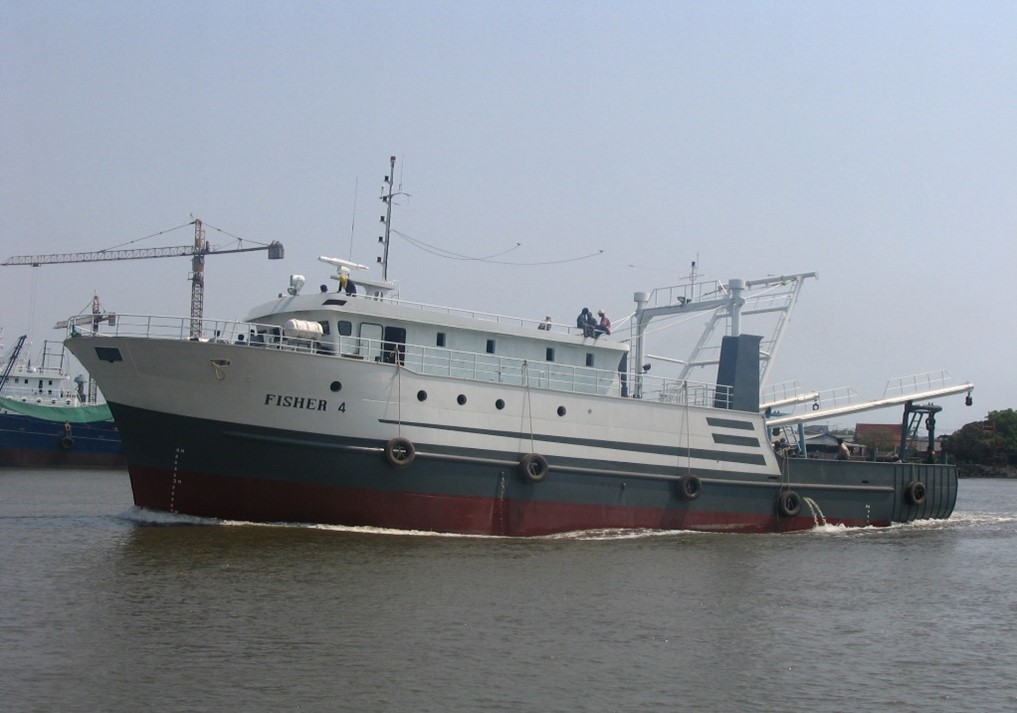
Commercial fishing is also shrinking. Statistics show that the catch by commercial trawlers reached a record 146,037 tonnes in Fiscal Year 2022–23. It then fell to 114,804 tonnes in Fiscal Year 2023–24 and stood at 116,650 tonnes in Fiscal Year 2024–25. Commercial fish catch in the Bay of Bengal had fallen by about 21% over three years.
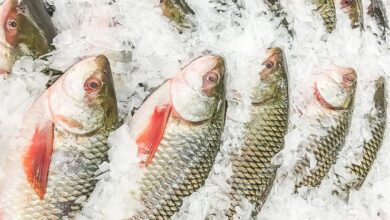
Perhaps the most alarming figure is the decline hilsa. Commercial hilsa landings fell from 8,138 tonnes in Fiscal Year 2022–23 to only 1,790 tonnes in Fiscal Year 2024–25, which is a staggering 78% decline. Several other important groups have suffered substantial reductions. Sardine-like fish, for example, declined by about 44%, from 50,783 tonnes in Fiscal Year 2022–23 to 28,564 tonnes in Fiscal Year 2024–25. Catfish catch also fell from 5,646 tonnes to 2,524 tonnes over the same period. The number of commercially harvested marine fish species has fallen from more than 112 to around 55–57 species.
There is no single explanation for Bangladesh’s declining marine catch. A combination of overfishing, pollution, indiscriminate trawling, destructive fishing gear, habitat degradation and changes in rivers and estuaries have driven this fall over the years.
Excessive fishing pressure in the Bay of Bengal has reduced its fish stocks and weakened their ability to replenish naturally. Plastic, industrial waste, agricultural runoff and other pollutants degrade the Bay’s water quality. Fine-mesh nets and other destructive gears catch undersized fish, fry and juveniles, which accelerates stock depletion. Damage to mangroves, mudflats, estuaries and coastal habitats has reduced several breeding and nursery grounds. Indiscriminate trawling also catches juvenile fish and non-target species. Increasing siltation of rivers and estuaries have alter the nutrient flow towards the Bay.
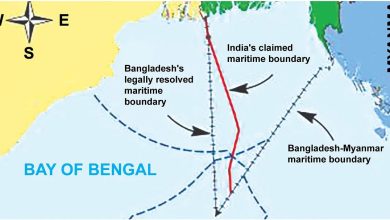
Bangladesh has a large maritime area with considerable potential for deep-sea fisheries. But much of the existing fishing pressure remains concentrated in relatively shallow areas. Bangladesh has rights over approximately 118,813 km2 of marine waters, including its Exclusive Economic Zone. Yet commercial trawlers reportedly operate in only around 27,000 km2.
Moreover, Bangladesh still does not have enough long-term scientific information about the condition of its marine fish stocks. So the question is “What does Bangladesh needs to do?”
Bangladesh must adopt science-based fisheries management rather than simply increasing fishing effort. This requires regular stock assessments, stronger control of illegal and destructive fishing, better vessel monitoring and catch reporting, protection of marine habitats and breeding grounds, and carefully managed expansion of deep-sea fishing.
The future of the country’s marine fisheries will ultimately depend not on how many fish can be caught from the Bay today, but on whether enough stocks remain to reproduce and sustain the fishery tomorrow.
Ali Arman Jobayer
Student, Faculty of Fisheries, PSTU