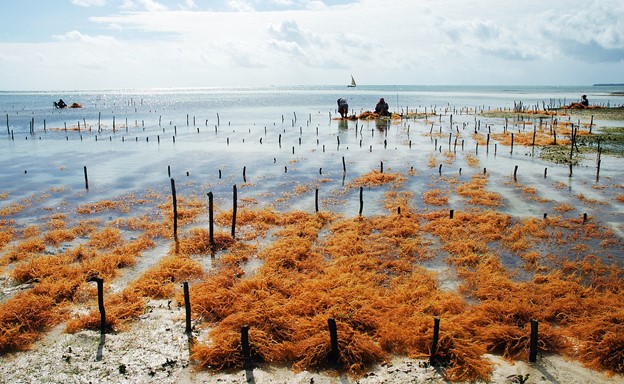
Along Bangladesh’s coast, a largely overlooked marine resource is quietly emerging as a potential new industry. Seaweed, often described as the “green gold” of the sea, could become an important part of Bangladesh’s blue economy, creating new livelihood opportunities while supplying raw materials for food, pharmaceuticals, cosmetics, agriculture and other industries.
With a 710-kilometre coastline and extensive coastal and intertidal habitats, Bangladesh has a natural foundation for developing a seaweed industry. Yet despite the country’s considerable seaweed diversity and growing research interest, commercial cultivation and processing remain at an early stage. The question is no longer simply whether Bangladesh can grow seaweed, but whether it can build the value chain, market and industries needed to turn seaweed into a commercially viable blue-economy sector.
A Marine Goldmine: Species and Potential
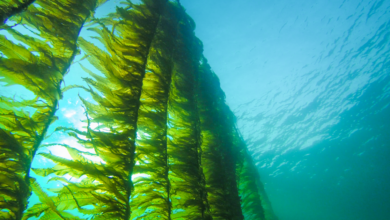
Bangladesh’s opportunity lies not simply in producing more seaweed, but in producing higher-value seaweed products. Species such as Gracilaria and Ulva can serve as raw materials for food products, animal feed and industrial applications, while seaweed-derived compounds such as agar, carrageenan and alginate have established commercial value.
From Farming to Industry
The real economic potential of seaweed begins after harvesting. Selling dried seaweed as a raw commodity generates relatively limited value; processing it into food ingredients, hydrocolloids, animal-feed additives, fertilizers, cosmetics and other value-added products can create substantially broader economic opportunities.
This means Bangladesh should not approach seaweed merely as another coastal farming activity. It should be viewed as an emerging marine industry connecting farmers with processors, food manufacturers, pharmaceutical companies, cosmetic producers, feed manufacturers and exporters.
Building this value chain will require investment in seed production, farming technology, drying and storage facilities, processing plants, quality control, packaging and market development. Without these components, increased production alone may not translate into a sustainable industry.
Bangladesh perspective
For Bangladesh, seaweed could become more than a supplementary livelihood for coastal households. Properly developed, it could support women-led enterprises, diversify fishing-dependent incomes, create new processing industries and contribute to a more climate-resilient coastal economy.
The opportunity, however, will depend on moving from scattered cultivation projects to an integrated industry strategy. Research institutions can provide species and farming technologies; farmers can drive production; private investors can develop processing and value chains; and policymakers can create the standards, incentives and infrastructure required for market expansion.
The seaweed industry does not need to begin with large offshore farms or massive investments. It can begin with better seed, better farming practices, better post-harvest management and, most importantly, a market for the final product.Bangladesh has spent decades looking to the sea primarily for fish. The next phase of the blue economy may require us to look at the ocean differently.The future of Bangladesh’s coastal economy may not only be about catching what the sea produces; it may also be about cultivating what the sea can grow. Seaweed could be one of those opportunities. The challenge now is to turn a promising marine resource into a competitive, inclusive and sustainable industry.