Frequent power outages across southwestern Bangladesh are putting the country’s export-oriented shrimp industry under growing pressure, disrupting farm operations and forcing processors to spend heavily on alternative power sources.
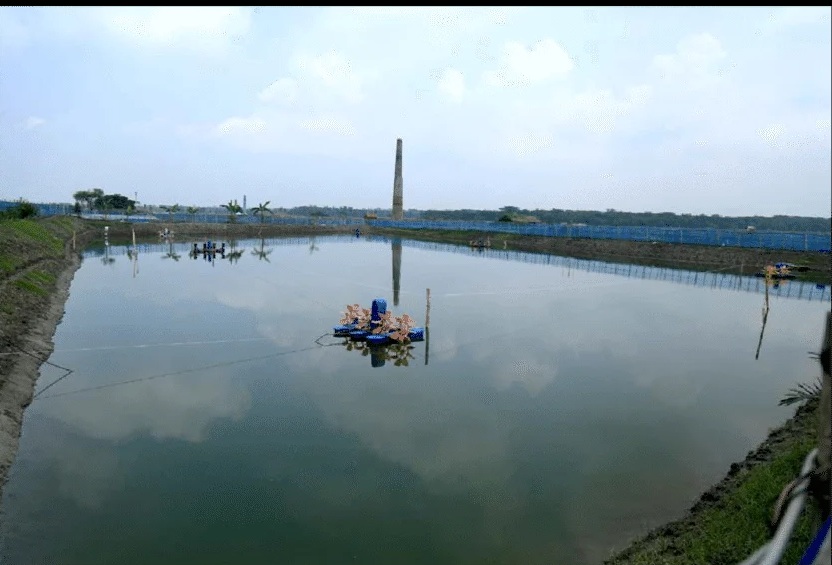
The impact is particularly serious for semi-intensive shrimp farms, where continuous aeration is essential to maintain dissolved oxygen levels and protect shrimp from stress and mortality.
According to the Department of Fisheries, shrimp and prawn farming covers 33,437.13 hectares in Khulna, 38,982.14 hectares in Bagerhat and 74,249 hectares in Satkhira.
From shrimp farms across the three districts to processing plants in Rupsha and other industrial areas, power outages are creating problems throughout the seafood supply chain.
The power crisis comes at a difficult time for the industry, which is already dealing with weak global demand, rising production costs, disease outbreaks, shortages of quality post-larvae and factory closures.
Farmers struggle to maintain oxygen levels
“When power outages staying for several hours, we become anxious. The aerators stop, oxygen levels fall and the shrimp begin to suffer. If electricity is not restored quickly, we risk losing an entire crop,” said Sutanu Gain, who operates 10 semi-intensive shrimp ponds in Batiaghata upazila.
Farmers in several areas said they are increasingly dependent on diesel-powered aerators and generators, adding significantly to production costs.
Nittananda Mondal of Bandha village in Dumuria said around 250 semi-intensive shrimp farms in the area are facing serious power outages related issues.
He claimed at least 20 farm owners had lost most of their shrimp fry because they were unable to operate paddle-wheel aerators.
“Many small and medium farmers simply cannot afford to run generators for long hours every day,” said Bipprodash Boiragi, a shrimp farmer from Chak Soilmari.
What farmers can do during power outages
With electricity shortages becoming increasingly frequent, aquaculture experts say farmers need emergency measures to protect shrimp when mechanical aeration is unavailable.
Water movement should be the first response. If multiple aerator can’t be run then farmers can use water pump to circulate pond water and create strong surface splashing. Pumping water and allowing it to fall back into the pond increases contact between water and air and can help maintain dissolved oxygen until normal aeration is restored.
Oxygen-releasing products can provide temporary support during emergencies. Sodium-percarbonate-based oxygen tablets are registered for aquaculture use in Bangladesh. Product guidance available in Bangladesh recommends around 300-400 tablets per acre (approximately 740-990 tablets per hectare) for general oxygen deficiency and 500-700 tablets per acre (approximately 1,235-1,730 tablets per hectare) for acute oxygen deficiency for a registered product. However, dosage varies by formulation, so farmers should follow the specific product label and guidance from fisheries professionals rather than applying a fixed dose to every oxygen tablet.
These products should be viewed as emergency oxygen support, not a substitute for proper aeration.
Farmers can also temporarily reduce feeding during prolonged power interruptions, because feed consumption and decomposition increase oxygen demand. Where stocking density is exceptionally high and the outage is expected to continue, partial harvesting or moving some biomass to another suitable pond can reduce the immediate oxygen burden. Such measures are particularly relevant to intensive and semi-intensive systems, where high biomass can cause dissolved oxygen to fall rapidly.
Maintaining a functional backup power system, including diesel generators or alternative energy sources, can provide a more reliable long-term solution. Farms with high stocking densities may also benefit from installing independent emergency aeration systems rather than relying on a single electricity connection.
Processing factories face higher costs
The electricity shortage is also disrupting shrimp processing plants, where uninterrupted power is essential for maintaining cold storage and food safety.
Mizanur Rahman, Assistant Manager of Southern Foods Limited, said outages had lasted seven to 10 hours a day, forcing the company to consume around 75 litres of diesel per hour to operate its cold storage.
“We can continue production using generators, but the cost is extremely high. Frequent outages also reduce productivity and disrupt delivery schedules,” he said.
Nazmul Huda Chowdhury, Manager of Rozemco Foods Limited in Rupsha, said continuous load-shedding had increased the risk of spoilage.
Maintaining an uninterrupted cold chain is essential for protecting the quality and safety of export-oriented shrimp, he said.
According to the Bangladesh Frozen Foods Exporters Association, only 30 of the 109 registered shrimp processing factories in Khulna and 18 in Chattogram are currently operating.
The factories have a combined processing capacity of around 400,000 tons a year, but are receiving only about 7% of the shrimp they need.
“This shortage of electricity has already forced many factories to suspend operations temporarily,” said Shyamal Das, Director of the association and Managing Director of MU Sea Foods Limited. He warned that continued disruption could affect an industry supporting nearly six million people.
Power deficit remains high
According to the West Zone Power Distribution Company, electricity demand in the Khulna zone reached 601 MW at 1pm on August 3, while supply stood at 486 MW, leaving a deficit of 115 MW. The gap was almost twice the 59 MW shortfall recorded a day earlier.
Khulna district and city recorded the largest deficit at 52 MW, compared with 19 MW the previous day. Significant shortages were also reported in Kushtia, Magura, Jhenaidah, Meherpur, Narail and Chuadanga.
Across the WZPDCL service area covering the Khulna and Barishal zones, demand reached 773 MW against supply of 657 MW, leaving a deficit of 116 MW.
Shrimp-producing rural areas served by the Khulna Palli Bidyut Samiti have also been badly affected.
Sanjay Kumar Roy, Deputy General Manager of the Dumuria Zonal Office, said the area’s four substations require between 23 MW and 25 MW, but had recently been receiving barely half of that amount.
Tushar Kanti Mondal, General Manager of the Khulna Palli Bidyut Samiti, said peak demand in its service area is around 80–85 MW, but supply shortages have made it impossible to meet that demand.
Risk to shrimp survival and production
Khulna District Fisheries Officer Md Badruzzaman said prolonged electricity shortages are creating serious challenges for semi-intensive shrimp farmers.
Khulna has 129 semi-intensive black tiger shrimp farms covering 474.09 hectares, along with 155 freshwater prawn farms covering 19.8 hectares, according to the district fisheries office.
“Most farmers are now relying on generators during load-shedding to keep their aerators running. Those who cannot afford generators are using diesel-powered aerators instead, significantly increasing their production costs,” he said.
The immediate priority for farmers is to prevent oxygen depletion, but the crisis also highlights a broader vulnerability in intensive aquaculture: farms that depend heavily on electrically powered aeration need reliable backup systems and emergency oxygen-management plans.
For the shrimp industry, restoring reliable electricity remains essential not only for protecting farm production but also for keeping processing plants operational and maintaining Bangladesh’s export supply chain.