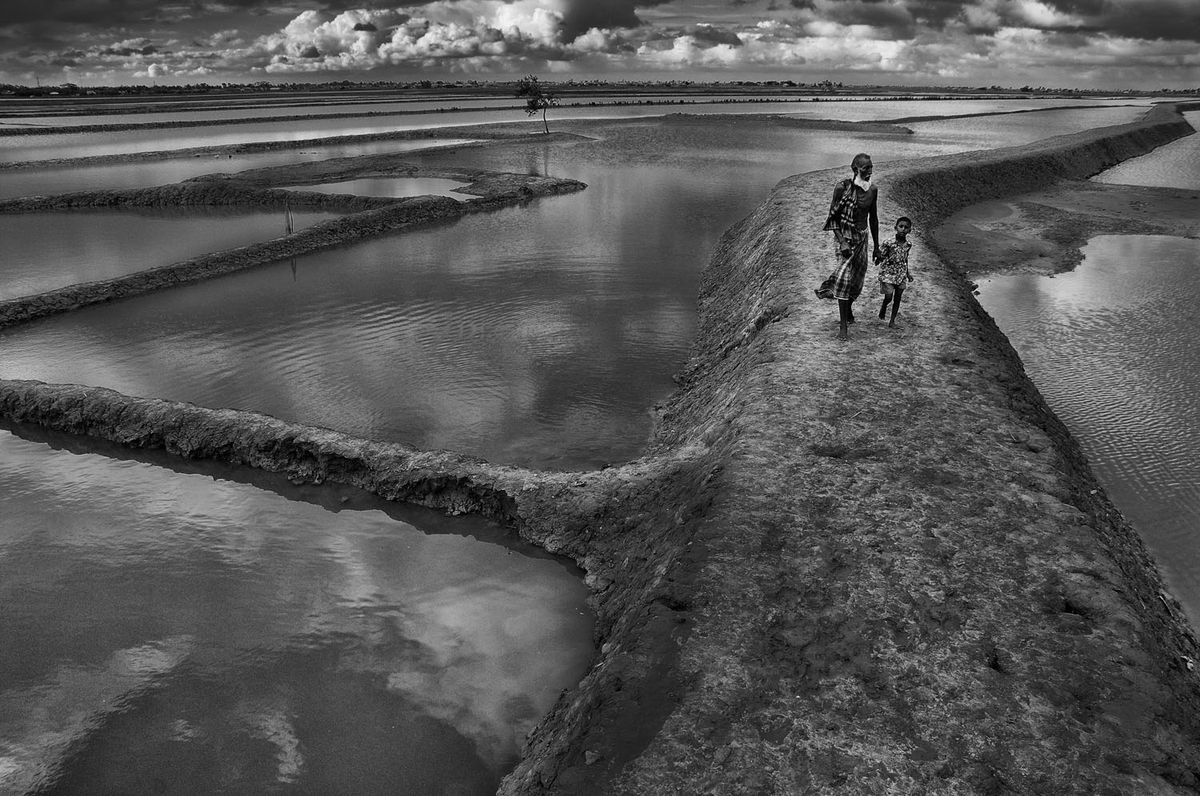
Bringing the tragedy of the lost Chakaria Sundarbans back into the public eye has reopened a profound and necessary national dialogue. Once the country’s second-largest mangrove forest, the Chakaria Sundarbans stood as a natural shield against cyclones, a nursery for countless aquatic species, and a source of livelihoods for coastal communities. Today, very little remains of that ecosystem.
For decades, the story has largely been told as one of irreversible environmental loss. Mangroves were cleared, land use changed, and one of Bangladesh’s most valuable coastal ecosystems disappeared. While the causes are well documented, the more important question now is not what happened; but what comes next.
Can Bangladesh restore the Chakaria Sundarbans without undermining the livelihoods that now depend on shrimp farming and salt production?
The answer may be yes; but only if we stop viewing conservation and economic development as competing priorities. Across Asia and beyond, a growing body of evidence suggests that healthy mangrove ecosystems and profitable aquaculture can reinforce one another when supported by sound science, modern farming practices, and appropriate policies.
The challenge before Bangladesh is therefore not simply restoring a lost forest. It is designing a new model of coastal development where nature and prosperity grow together.
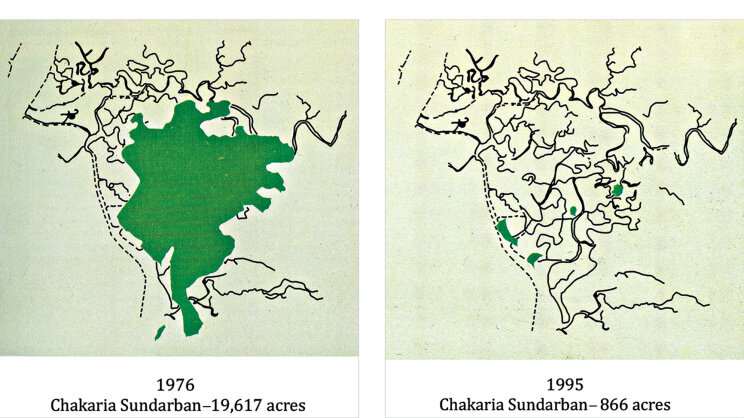
Learning from the past without repeating it
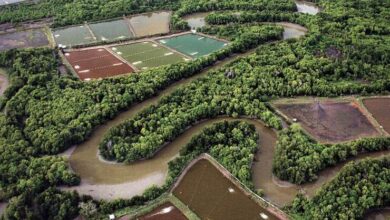
The destruction of the Chakaria Sundarbans is often associated with the rapid expansion of shrimp farming. While aquaculture undoubtedly played a role in land conversion, attributing the loss solely to shrimp farming oversimplifies a far more complex story.
The real issue was not shrimp production itself, it was the way development took place.
During the rapid expansion of coastal aquaculture, success was largely measured by the number of hectares converted into production rather than by productivity, environmental sustainability, or long-term resilience. Mangrove forests were widely regarded as unused land waiting to be developed instead of natural infrastructure that protected fisheries, coastlines, biodiversity, and local communities.
At the time, little attention was given to maintaining ecological balance, restoring degraded areas, or increasing production from existing farms through better management.
Today, the global aquaculture industry has largely moved beyond that approach.
Instead of expanding endlessly into new land, successful aquaculture nations are increasingly focusing on producing more from existing farms while protecting the ecosystems that make coastal farming possible in the first place.
That shift offers Bangladesh an important opportunity.
The world has already found a better path
One of the strongest examples comes from Vietnam.
Over the past two decades, several coastal provinces in the Mekong Delta have adopted integrated mangrove-shrimp farming systems, commonly known as silvo-aquaculture. Rather than clearing mangroves entirely, farmers cultivate shrimp while maintaining a significant portion of natural mangrove cover within or around their farms.
This approach delivers multiple benefits.
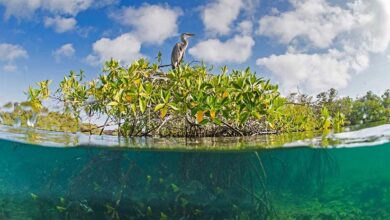
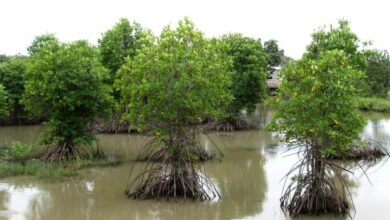
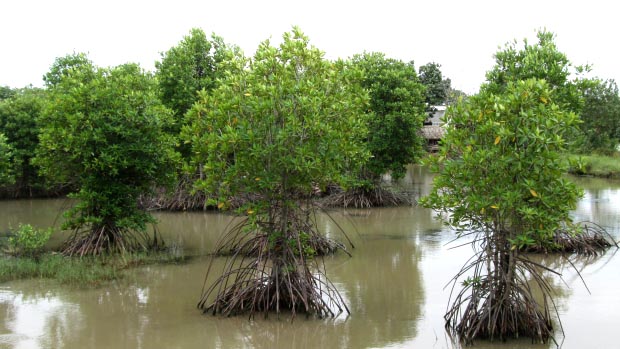
Mangroves improve water quality by filtering sediments and nutrients. Their root systems provide habitat for fish, crabs, molluscs, and beneficial microorganisms that support healthier aquatic ecosystems. The trees stabilize embankments, reduce erosion, and offer protection against increasingly frequent storms.
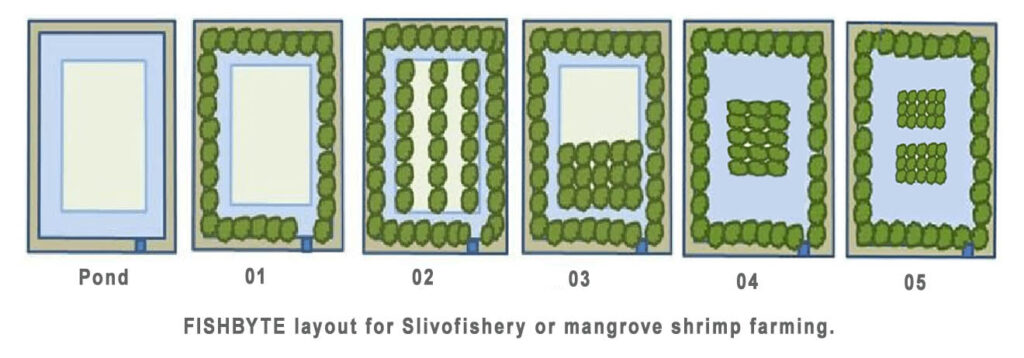
At the same time, shrimp raised in these environmentally friendly systems often qualify for sustainability certifications and can access premium international markets willing to pay higher prices for responsibly produced seafood.
Vietnam’s experience demonstrates that mangrove conservation is not necessarily a cost to shrimp farming. Under the right conditions, it becomes part of the farm’s economic value.
Indonesia has also invested heavily in restoring mangrove ecosystems while improving sustainable aquaculture practices. The country has recognized that degraded coastlines reduce fisheries productivity, increase climate vulnerability, and ultimately threaten rural economies.
Elsewhere, countries including Ecuador have strengthened mangrove protection while promoting responsible shrimp production, illustrating that environmental restoration and export-oriented aquaculture can coexist when supported by effective governance.
These examples offer an important lesson for Bangladesh.
The question is no longer whether mangroves and shrimp farming can coexist.
The question is whether Bangladesh is prepared to adopt the policies and investments that make such coexistence possible.
Bangladesh does not need more shrimp land
One of the biggest misconceptions surrounding Bangladesh’s shrimp sector is that increasing production requires expanding farming areas.
In reality, the country’s greatest opportunity lies elsewhere.
Bangladesh already possesses one of the largest coastal shrimp farming areas in the world. Yet average productivity remains significantly lower than many competing producer nations.
Improving farm management could generate far greater economic returns than expanding into additional coastal ecosystems.
Higher-quality post-larvae, better pond preparation, improved water quality management, stronger biosecurity, scientific feeding practices, disease prevention, digital monitoring technologies, and farmer training all have the potential to substantially increase production per hectare.
In other words, Bangladesh needs higher productivity; not larger footprints.
Every additional kilogram of shrimp produced from existing farms reduces pressure to convert more natural ecosystems.
This shift from expansion to efficiency is central to the future of sustainable aquaculture.
Turning conservation into an economic asset
One of the biggest barriers to restoration is the perception that conservation is expensive while development generates income.
That assumption is increasingly outdated.
Healthy mangrove ecosystems provide measurable economic value.
They store large amounts of carbon, protect coastal infrastructure from storm surges, reduce erosion, improve fisheries, support biodiversity, and enhance water quality. Many of these ecosystem services are now attracting international climate finance through blue carbon initiatives, biodiversity financing, and payment-for-ecosystem-services programs.
Instead of viewing restored mangroves as land removed from economic use, Bangladesh can begin treating them as productive natural assets.
Farmers who protect or restore mangroves should not be expected to bear the costs alone.
They should be rewarded.
Financial incentives could include:
- Access to premium certified seafood markets.
- Payments linked to ecosystem restoration.
- Carbon finance opportunities.
- Preferential access to green investment.
- Lower-cost financing for climate-smart aquaculture.
- Technical support for integrated farming systems.
When conservation creates income, environmental protection becomes a rational business decision rather than a regulatory obligation.
A new vision for Chakaria
Restoring the entire historical Chakaria Sundarbans is unlikely to happen overnight.
Nor should restoration begin with unrealistic expectations.
Instead, Bangladesh could establish a carefully designed Chakaria Mangrove and Climate-Smart Aquaculture Restoration Zone.
Such a pilot initiative could focus initially on selected areas where ecological restoration and sustainable livelihoods can be developed together.
Its objectives could include:
- Restoring tidal connectivity where feasible.
- Re-establishing native mangrove species.
- Promoting integrated mangrove-shrimp farming.
- Introducing climate-smart aquaculture technologies.
- Improving farmer productivity on existing ponds.
- Supporting community-led resource management.
- Expanding opportunities for women and young entrepreneurs.
- Monitoring ecological recovery using satellite imagery and digital tools.
- Measuring carbon storage and biodiversity improvements.
This would not simply be a conservation project.
It would become a living laboratory for Bangladesh’s future coastal economy.
Success in one landscape could provide a blueprint for other degraded coastal regions.
Making Bangladesh a leader rather than a follower
Bangladesh has often been recognized globally as a pioneer in community-based adaptation and climate resilience.
The country now has an opportunity to become a regional leader in integrating mangrove restoration with sustainable aquaculture.
Global seafood buyers are placing increasing emphasis on traceability, environmental performance, and climate responsibility.
Investors are directing more capital towards businesses that demonstrate measurable environmental and social outcomes.
Development partners are supporting nature-based solutions that strengthen both livelihoods and ecosystem resilience.
Rather than viewing these trends as external pressures, Bangladesh can leverage them as competitive advantages.
A shrimp sector associated with healthy mangroves, responsible production, and climate resilience will likely be stronger in international markets than one associated with environmental degradation.
The future is not about choosing between shrimp and forests
For too long, debates surrounding coastal development have been framed as a choice between environmental protection and economic growth.
That is a false choice.
Without healthy ecosystems, shrimp farming itself becomes more vulnerable to disease, declining water quality, erosion, salinity fluctuations, and climate-related disasters.
Likewise, conservation that ignores the economic realities of coastal communities is unlikely to succeed over the long term.
The future lies somewhere in between.
It lies in producing more with less environmental impact.
It lies in rewarding farmers for stewardship rather than land conversion.
It lies in recognizing mangroves as productive infrastructure instead of idle land.
Most importantly, it lies in understanding that restoring ecosystems is not simply about correcting past mistakes—it is about creating new economic opportunities for future generations.
The Chakaria Sundarbans cannot be brought back exactly as they once were.
History cannot be reversed.
But history can inform better decisions.
The story of the Chakaria Sundarbans should not end as Bangladesh’s greatest environmental regret. It should become its greatest environmental lesson. We cannot reclaim the forest exactly as our grandparents knew it, but we can ensure our grandchildren inherit a coastline that is healthier, more prosperous and more resilient than the one we inherited. Bangladesh cannot rewrite the chapter that has already been written; but it still holds the pen for the chapters that follow.