
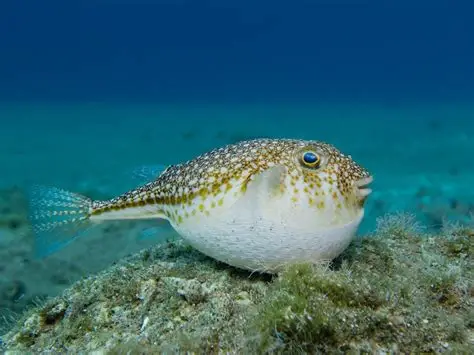
Puffer fish, a cheap and easily available fish in Bangladesh, has repeatedly been associated with fatal poisoning. Puffer fish is locally known as potka or tepa. Puffer fish may look like an ordinary fish, but some species contain tetrodotoxin (TTX).
TTX was first discovered in 1909 by Dr. Yoshizumi Tahara from the ovaries of globefish. But puffer fish have been known to be toxic to humans for a long time. Species contain tetrodotoxin (TTX) is a very potent neurotoxin that is found in a variety of marine and terrestrial species. TTX is over a thousand times more toxic to humans than cyanide.
Structurally TTX consists of a guanidinium moiety connected to a highly oxygenated carbon skeleton that possesses a 2,4-dioxaadamantane portion containing five hydroxyl groups. TTX co-exists with its naturally occurring analogues. There are about 30 structural analogues of TTX and the degree of toxicity varies with structure.
Tetrodotoxin works by blocking voltage-gated sodium channels in nerve and muscle cells. This prevents normal nerve impulses from reaching muscles and can lead to progressive paralysis. Poisoning commonly begins with numbness or tingling around the mouth, followed by weakness, dizziness, nausea, vomiting and, in severe cases, paralysis of the muscles required for breathing. Death can therefore occur through respiratory failure.
The toxin is particularly concentrated in organs such as the liver, ovaries, intestines and skin. Although, TTX distribution varies among species and individual fish. Puffer fish that inhabit in brackish water and freshwater regions, toxicity is higher in the skin than in marine species. Importantly, muscle tissue of some species may also contain toxin. TTX is both heat-stable and water-soluble, which means that ordinary household cooking methods cannot be relied upon to destroy it.
Most of the consumers of Bangladesh are unfamiliar with its toxicity. Bangladesh has a long history of puffer-fish poisoning. A 2002 incident in Khulna, where 37 patients were admitted and eight died from respiratory failure. During three major outbreaks in 2008, 141 patients were hospitalized and 17 died. In December 2016, at least six people died and 17 others became ill after eating puffer fish in Jaintapur, Sylhet. More recently, in 14 September 2026, five members of a family in Ashashuni, Satkhira, reportedly fell ill after eating puffer fish purchased from a local market. One of them was died while receiving treatment and others were hospitalized. These incidents show that puffer-fish poisoning has occurred in multiple regions of Bangladesh.
So, how should puffer fish be cooked? The most important answer is that consumers should not try to make an unidentified or potentially toxic puffer fish safe through ordinary cooking. Boiling, frying or drying does not reliably destroy tetrodotoxin. In countries where certain puffer fish are legally prepared as food, safety depends on strict species identification and specialized processing by trained personnel who know how to remove the toxic organs.
The U.S. FDA notes that commercially permitted puffer fish require controlled sourcing and specialized preparation methods. Japan’s fugu industry similarly relies on trained and licensed specialists to prepare puffer fish dishes.
For Bangladesh, the message is therefore not to experiment with preparation techniques. People should avoid eating unidentified puffer fish from both freshwater and marine sources. Sellers and traders also need to be able to distinguish potentially toxic species before they enter the food chain.
Market monitoring, correct species identification, public education and access to emergency respiratory support are particularly important measures. Awareness is especially important because poisoning can progress rapidly. There is no specific antidote for tetrodotoxin poisoning. Treatment is primarily supportive, with respiratory assistance potentially becoming lifesaving when paralysis affects breathing. Greater awareness among fishers, traders, consumers and healthcare workers can therefore play an important role in prevention.
Ali Arman Jobayer
Student, Faculty of Fisheries, PSTU.