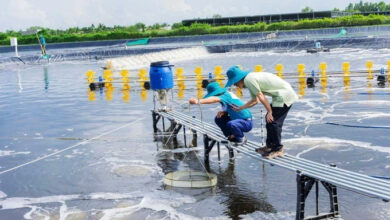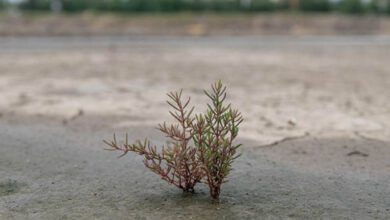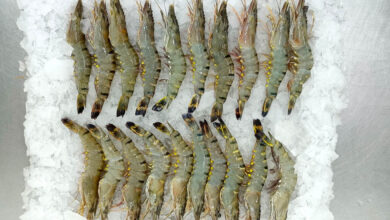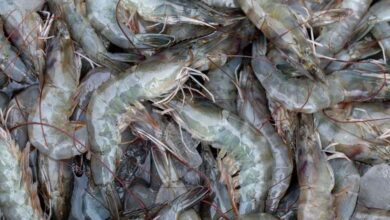
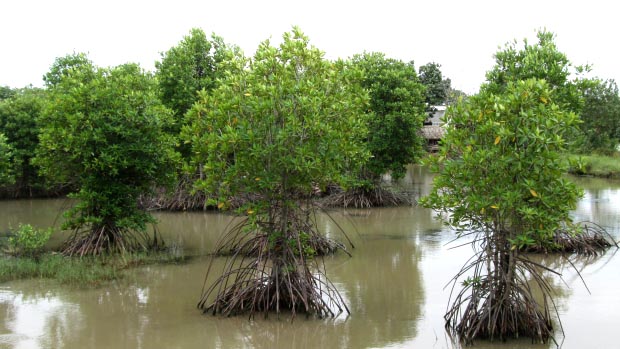
Shrimp farming is one of the most economically important forms of coastal aquaculture, but shrimp farming and mangrove conservation are often presented as conflicting interests. The expansion of shrimp farming has historically been associated with the conversion and degradation of the mangrove ecosystems. This creates an important question: must shrimp production come at the expense of mangrove conservation, or can both coexist?
Global mangrove cover has declined by roughly 30% to 35% over the past five decades. Shrimp farm expansion has been a primary driver of mangrove loss in Southeast Asia and Latin America. Bangladesh’s Chakaria Sundarbans in Cox’s Bazar lost approximately 6,500 hectares between 1976 and 1988 alone, which was once a dense forest and was considered as the country’s second-largest mangrove ecosystem, but it has disappeared entirely from the country’s map as a mangrove ecosystem. Shrimp farming operations were responsible for about 84% of the total mangrove loss in Cox’s Bazar.
About 7,000 acres of mangrove forest have been destroyed in the ecologically critical Sonadia Island under Maheshkhali upazila of Cox’s Bazar over the past four years. This island once had approximately 10,000 acres of mangrove forest, which have now replaced by over 80 shrimp farms. To clear the forest land, an estimated 4.6 million trees including Bain and Keora were cut down or burned.
A study shows that about 44 percent of stakeholders agreed that mangroves were destroyed by the extension of shrimp farming in south-western coastal area of Bangladesh. Indonesia and Ecuador have also experienced the mangrove-aquaculture conflicts. But the recent initiatives like “silvofishery model” in Indonesia and the productive mangrove restoration in Ecuador offer a significant blueprint for a different future for mangrove friendly aquaculture.
The Silvofishery Model:
Silvofishery integrates mangrove trees directly into or around shrimp ponds, which creates an effective system where mangroves can contribute to nutrient cycling, sediment retention and water-quality regulation within appropriately designed aquaculture systems. The mangrove trees protect coastal farm lands from abrasion and provide a suitable natural habitat for aquatic organisms and associated biodiversity. For example, one silvofishery model uses the 60:40 model, where 60% of the land is used for mangrove restoration and rest of the 40% land is used for shrimp or crab culture. The model is currently being modernized through public-private partnerships and mutual community actions. A strong example comes from Dabong Village of West Kalimantan, where a public-private collaboration brought silvofishery to previously rehabilitated community ponds.
The Restoration Model in Ecuador:
Ecuador tells a different story of industrial-scale restoration of mangroves. In June 2026, the National Chamber of Aquaculture (CNA), the Sustainable Shrimp Partnership (SSP) and Conservation International Ecuador formalized the “Mangroves for Climate” initiative. Their targets are concrete to restore 250 hectares of mangroves, reduce an estimated 112,870 metric tons of CO₂ emissions and promote certified production practices across 20,000 hectares of shrimp farms by 2030. Under the initiative, the organizations will establish a framework for collaboration and implement joint actions to achieve those goals. The broader Green Climate Fund Mangroves for Climate project has much larger objectives to protect/manage 150,000 ha and restore 4,850 ha of degraded mangroves.
But what is the best model for Bangladesh?
Integrated Mangrove Shrimp Aquaculture (IMSA) can be a game changer in mangrove friendly shrimp farming in Bangladesh. This model focuses on strategically to integrate mangroves back into the shrimp farm landscapes. The “Mangrove-Polders” initiative, which is a collaboration between Dutch and Bangladeshi organizations, have been piloting IMSA in districts like Khulna and Satkhira. Their research suggests that some mangrove leaf litter can contribute to improve water quality of the farms and stimulate natural food production. These actions boost shrimp growth and survival.
The success of IMSA depends heavily on choosing the right mangrove species. The Mangrove-Polders project has identified four species that are most suitable for integration with shrimp aquaculture in coastal region of Bangladesh. Those are: Sonneratia apetala (Keora), Avicennia officinalis (Baen/Bain), Bruguiera sexangula (Kankra),Heritieria fomes (Sundri). A combination of these species proved even more effective than planting a single type. This combination creates synergistic effect that maximizes shrimp growth and farm health, although the effects depend on species composition and culture conditions.
From Conflict to Coexistence:
For Bangladesh, the goal should not be to expand shrimp farms into remaining mangrove forests. Instead, the priority should be given to increase shrimp productivity on existing aquaculture land while restoring mangrove trees within and around farming landscapes. A successful mangrove-friendly shrimp farming strategy could involve several interconnected actions, such as: Protecting existing mangroves, Restoring degraded landscapes, redesigning existing shrimp farms, promoting community-based management, creating economic incentives, Strengthening monitoring and enforcement.
Mangrove-friendly shrimp farming does not mean establishing shrimp ponds and farms randomly inside natural mangrove forests. It means developing aquaculture models in ways that recognize the ecological functions of mangroves and avoid repeating the mistakes of uncontrolled expansion.
Ali Arman Jobayer
Student, Faculty of Fisheries, PSTU.