Globally, approximately 39 million people are engaged in fishing activities, accounting for about 95% of the world’s seafaring workforce. Despite their vital contribution to food security, nutrition, and livelihoods, fishers remain one of the most overlooked occupational groups. It is estimated that nearly 73% of fishers have never received formal safety training, increasing their vulnerability in one of the world’s most hazardous professions. According to the International Fund for Fishing Safety (IFFS), this reflects a remaining global gap in occupational safety and training within the fisheries sector. The human cost of fishing is substantial. Approximately four fishers lose their lives every hour worldwide, resulting in an estimated 32,000 fatalities annually. In addition, around 26% of fishers report experiencing physical or mental harm due to unsafe and demanding working conditions. Significant challenges persist in implementing international instruments such as the Cape Town Agreement of the International Maritime Organization (IMO) and the Work in Fishing Convention, 2007 (C188) of the International Labour Organization (ILO), both of which aim to establish minimum standards for safety, health, and welfare in the fishing sector.
This regulatory gap, together with inadequate safety training, poor working conditions, and unsafe fishing vessels, continues to place millions of fishers at risk. Strengthening the implementation of international conventions, enhancing safety training programs, and improving vessel safety standards are urgently needed to protect lives and promote decent work in the global fisheries sector. Ensuring the safety of fishers’ lives and making proper arrangements for the rehabilitation of missing fishermen and their families must be treated as an urgent humanitarian and policy priority.
The Growing Dangers Facing Fishermen in Bangladesh
The risks faced by fishermen in Bangladesh are increasing as marine fish stocks continue to decline. This trend is having a profound impact on the livelihoods of coastal fishing communities, many of whom depend almost entirely on fishing for income and food security. Despite growing dangers and diminishing catches, fishermen are often compelled to continue fishing to sustain their families.
According to the study Dwindling Coastal Fisheries Biodiversity of Bangladesh: The Causes and Effects, coastal fish resources are being overexploited, resulting in a rapid decline in many commercially important species. Consequently, the contribution of the marine fisheries sector to the national fisheries economy has been decreasing over time. Furthermore, approximately 28% of coastal fish species assessed by the International Union for Conservation of Nature (IUCN) are currently listed on the IUCN Red List of Threatened Species, highlighting the growing conservation concerns associated with marine biodiversity loss.
Rising Number of Missing Fishermen
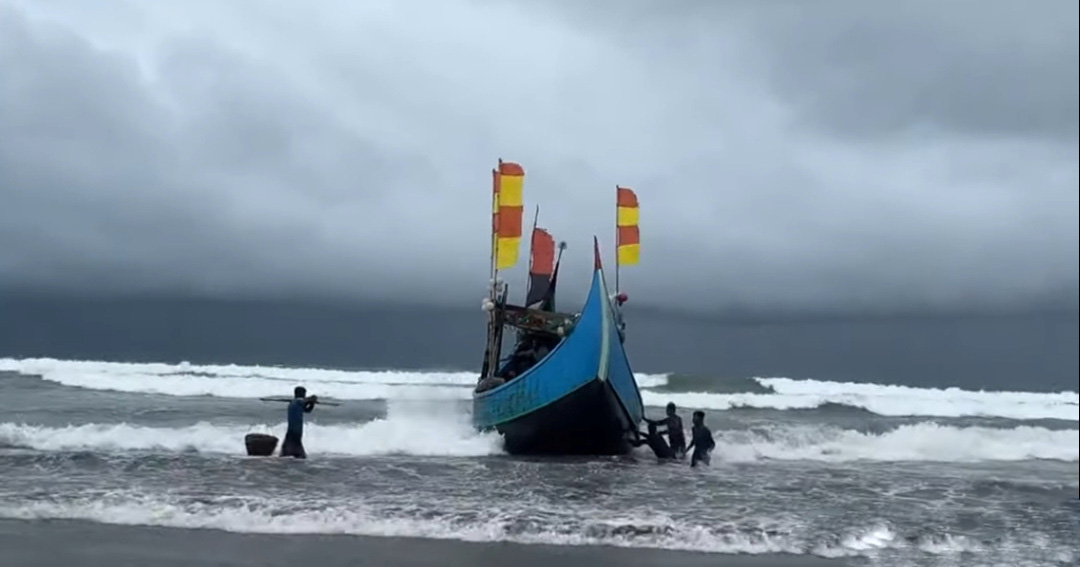
Each year, numerous fishermen go missing due to cyclones, storms, rough seas, and other maritime hazards. Many coastal communities report that sea conditions have become increasingly unpredictable and dangerous. Delays in receiving weather warnings and inadequate safety measures further increase the risks faced by fishing crews. Bangladesh has 19 coastal districts, with Cox’s Bazar, Chattogram, Noakhali, Lakshmipur, Bhola, Patuakhali, Barguna, Pirojpur, and Bagerhat hosting the largest populations of sea-going fishermen. More than one million people are engaged in coastal fishing activities. However, despite the increasing frequency of accidents at sea, there is no comprehensive national database documenting the number of fishermen who go missing annually.
The local administration in Patharghata Upazila of Barguna District has compiled a list of missing fishermen. According to this record, approximately 200 fishermen went missing while fishing in the upazila between 1993 and 2024 (The Daily Star). The initiative was undertaken to facilitate access to government and non-government assistance for affected families and to document the growing human cost of maritime disasters. According to local stakeholders involved in preparing the list, many families of missing fishermen face extreme hardship following the disappearance of their primary income earners. In numerous cases, women are forced to assume sole responsibility for supporting their households under challenging socioeconomic conditions.
The Growing Impact of Climate and Environmental Change
The sea has become increasingly turbulent in recent years, with deteriorating weather conditions posing greater risks to fishing communities. Sedimentation has accumulated in many coastal and estuarine areas, altering navigation routes and creating additional hazards for fishing vessels. Furthermore, many fishermen do not receive weather forecasts and warning signals in a timely or effective manner, limiting their ability to respond to approaching storms and other extreme weather events.
As a result, the number of missing fishermen continues to rise. To address this growing crisis, there is an urgent need to strengthen search-and-rescue capacity through the provision of dedicated rescue vessels and improved emergency response systems. In addition, comprehensive rehabilitation and social protection measures should be established to support the families of missing fishermen, many of whom face severe economic hardship following the loss of their primary income earner.
Fishing has always been recognized as a hazardous occupation; however, the risks faced by fishermen are now intensifying. Coastal fishers are increasingly encountering stronger storms, rougher seas, and more unpredictable weather patterns, conditions that are often associated with climate variability and environmental change. Consequently, every fishing voyage has become a high-risk undertaking, where livelihoods and lives are constantly at stake.
Missing Fishermen as a Form of Non-Economic Loss and Damage
The issue of missing fishermen along the coast of Bangladesh represents an important example of Non-Economic Loss and Damage (NELD), a concept that has gained increasing attention in international climate change discussions. Beyond economic losses, the disappearance of fishermen results in psychological trauma, loss of social identity, family separation, cultural disruption, and long-term emotional suffering. These impacts are difficult to quantify in monetary terms but significantly affect the resilience and well-being of coastal communities facing the growing challenges of climate change and environmental degradation.
Given the increasing vulnerability of coastal fishing communities, urgent policy interventions are needed to improve maritime safety, strengthen weather communication systems, expand rescue and emergency response capabilities, and provide long-term support for families affected by the loss or disappearance of fishermen. Such measures are essential for safeguarding both the livelihoods and the lives of those who depend on the sea.
Finally, can say that ensuring the safety of fishers’ lives and making proper arrangements for the rehabilitation of missing fishermen and their families must be treated as a national and humanitarian priority.
Al Shahriar
Fisheries Management Officer
Nature Conservation Management (NACOM)
Cox`s Bazar, Bangladesh