Ornamental fish (aquarium fish) culture is a growing sector in Bangladesh. The demand for ornamental fish is increasing day by day in both urban and rural areas as aquarium fish culture has become a favourite hobby for the people of all ages. The industry began commercially in the 1980s and has expanded throughout the country. Bangladesh’s favorable climate, abundant water resources and low-cost technologies make it suitable for breeding and rearing many ornamental fish species.
Bangladesh has a long but undocumented and unregulated history of ornamental fish introductions. Many ornamental fish species entered the country without proper documentation and quarantine measures. The Siamese Gourami (Trichogaster pectoralis) was the first recorded ornamental fish introduced to Bangladesh in 1952 from Singapore, followed by the Goldfish (Carassius auratus) in 1953 from Pakistan. As the demand increased, Katabon in Dhaka emerged as the country’s principal hub for ornamental fish trade and culture which made the foundation for a growing and promising aquaculture industry.
Today this sector is not limited within the walls of small glass aquariums. Many people are taking ornamental fish culture as a profession. Ornamental fish farming in Bangladesh is transforming from a hobby into a vibrant economic activity. It has a significant potential for youth employment and income generation. Many people, particularly youth, are culturing ornamental fish commercially. This business can be started with a very small investment. As a result, it is accessible to students and aspiring entrepreneurs. Rooftop spaces are often sufficient for commercial farming, as seen in Dhaka and Narayanganj. In some rural areas cemented tanks or large containers are used to culture ornamental fish. Farmers are earning Tk 10,000 to Tk 100,000 per month. Mehrab Emon, a 28-year-old from Patuakhali town, began breeding Fighter Fish (Betta) as a hobby in January 2021. Now he earns over Tk 1 lakh per month. [ Source: The Daily Star, November 2025]
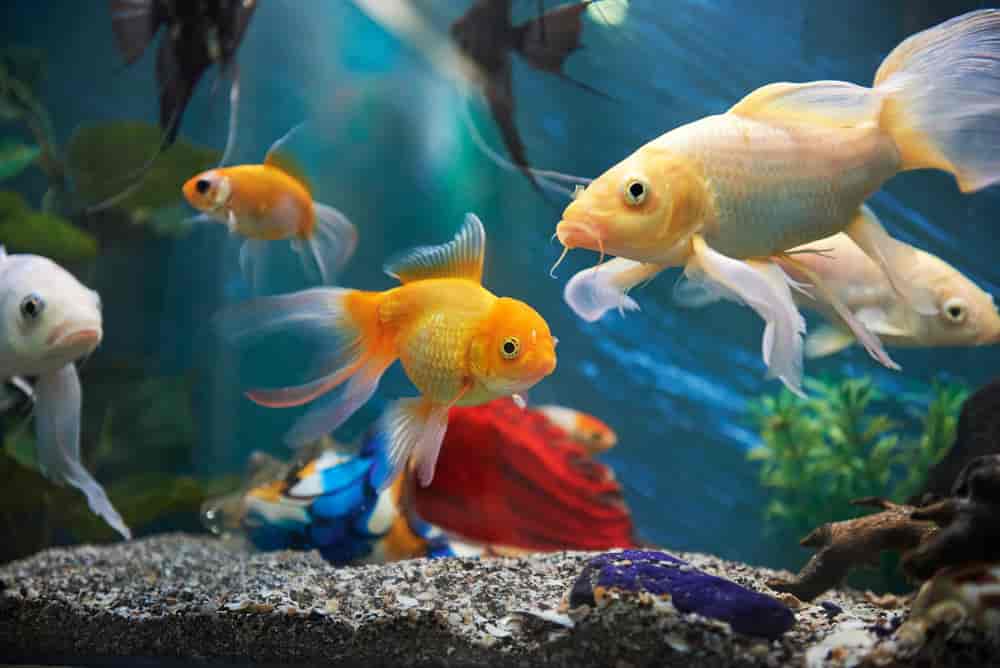
Today more than 150 species and varieties of ornamental fish are currently available in Bangladesh. These include Goldfish, Guppy, Molly, Platy, Swordtail, Angelfish, Oscar, Koi, Discus and Betta. The majority are freshwater species because they are easier to breed and maintain under small-scale farm conditions with a very little infrastructure. Advances in artificial breeding techniques have given opportunity and access to local farmers to produce many species domestically. This has reduced the dependence on imports. The breeding and culture practices in Bangladesh have become increasingly scientific and diversified. Farmers generally manage two main categories of fish. The first are livebearers such as Guppy, Molly and Platy, which give birth to free-swimming fry. And the second are egg-layers like Goldfish and Angelfish, which require specific conditions for spawning.
It’s value chain has also expanded considerably across the country. It now includes broodstock suppliers, hatcheries, feed manufacturers, aquarium and accessory businesses, transportation services and online retailers. Social media platforms have further accelerated the sector’s growth which allow breeders to sell fish directly to customers across the country. Rapid delivery or courier services play a key role in this sector.
Despite of this progress, Bangladesh remains a net importer of ornamental fish. In 2024, Top exporters of Live ornamental fish to Bangladesh were Thailand ($214.41K, 3,768 Kg), India ($42.61K, 43,974 Kg), Indonesia ($28.60K, 1,366 Kg), Singapore ($10.04K), United States ($4.65K, 95 Kg). This indicates a growing domestic demand. It also highlights the opportunities for import substitution through increased local production. Bangladesh has already established export procedures for freshwater ornamental fish under HS Code 03011100 which require export licenses and quality certification from the Department of Fisheries. These regulatory frameworks provide a foundation for future expansion into international markets.
Bangladesh possesses up to 30 native species with ornamental potential such as species of Badis, barbs, snakeheads, minnows, eels and small colorful cyprinids that remain largely unexplored commercially. Promoting these indigenous species would create new business opportunities for small entrepreneurs. It would also contribute to biodiversity conservation and export-based income generation.
It’s future of farming in Bangladesh is bright. The Bangladeshi ornamental fish market is expected to grow at a compound annual growth rate (CAGR) of 4.5% between 2026 and 2032. The market value is projected to increase from an estimated USD 304 million in 2025 to USD 413 million by 2032. The desire for uncommon and eye-catching ornamental or aquarium fish is driven by urbanization, social media influence and rising disposable incomes. Additionally, the growing popularity of home aquariums or office aquariums decorations among the people as a stress-relieving hobby is one of the key drivers of this rise. Policymakers must prioritize to establish a regulatory framework for invasive species and increase investment in local broodstock development. It is also important to establish international-level certification standards to ensure fish health and fair trade.
Ali Arman Jobayer
Faculty of Fisheries, PSTU.