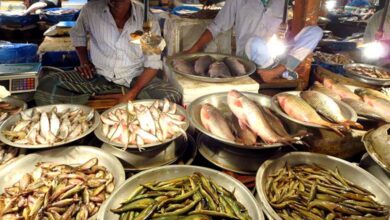
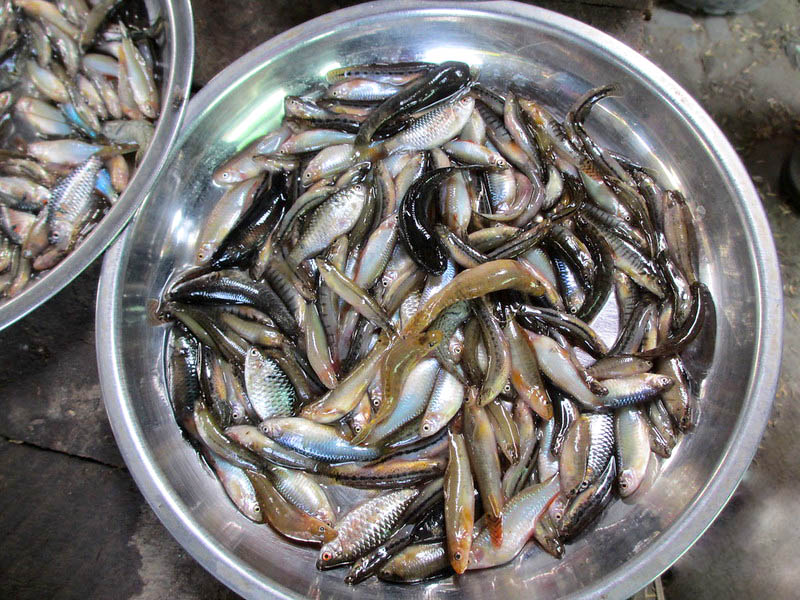
Fish has long held pride of place on the Bangladeshi plate and for good reason. Among all easily digestible sources of animal protein fish tops the list. The country’s small fish (indigenous species) locally known as “chhoto mach” not only has high nutrient value but is affordable for all classes of people. Species such as mola, dhela, puti, taki, shing, magur, koi, and shol are not just affordable staples of rural diets.
Fish supplies the body with lysine and sulphur-rich amino acids that are otherwise hard to obtain from staple foods like rice and wheat, whose energy contribution alone cannot fully meet a child’s nutritional needs. Beyond protein, fish liver fat is a valuable source of vitamins A and D, both essential for healthy bones, teeth, skin, and eyes. Fish is also rich in B-vitamins particularly vitamin B6 and niacin which support skin health and nervous system function, along with minerals such as calcium, phosphorus, iron, and iodine.
Fish with firm, hard scales are considered a particularly rich source of zinc, a mineral that plays a critical role in strengthening immunity. Marine fish, meanwhile, provide fluoride, which helps prevent tooth decay. Taken together, these nutrients allow fish to play a preventive role against several serious health problems, including infertility, anemia, and goiter.
On average, fish is made up of 66–84% water, 15–24% protein, 0.1–22% fat, and 0.8–2% minerals. Within every 100 grams of edible fish, nutrient levels typically range widely: calcium (4.81–232.9 mg), magnesium (30.21–53.06 mg), sodium (30–150 mg), potassium (250–500 mg), phosphorus (100–400 mg), iron (2–44.75 mg), iodine (0.01–0.5 mg), chlorine (0.5–10 mg), and zinc (0.7–3.0 mg). This makes small fish, in particular, an important source of the macro- and micronutrients the human body depends on.
Small Fish deserves special attention because they contain exceptional source of animal protein, delivering generous amounts of vitamin A, calcium, phosphorus, iron, and zinc. Varieties such as mola, dhela, chela, shing, magur, and koi are especially beneficial for eye health and for preventing anemia. They are also a source of omega-3 fatty acids, which help lower cholesterol and reduce the risk of heart disease a benefit especially important for fetal brain development during pregnancy.
Because these fish are usually cooked and eaten whole, including the bones, they deliver a concentrated dose of calcium and phosphorus that larger fish typically eaten in fillet form cannot match. Species like mola, dhela, and rui-type fish can also be farmed together without any negative impact on production, and their small size makes them easy to distribute evenly within a household. For rural communities in particular, small fish represent an accessible and affordable route to better nutrition, and a meaningful source of income.
Among small fish mola stands out for its exceptionally high-quality and easily digestible protein. It is especially rich in vitamin A and iron making it valuable in preventing night blindness and anemia. Interestingly, the calcium in mola is considered comparable to the calcium found in milk. Studies have found that a 1–3 gram mola fish contains roughly 8 mg of retinol and 12 mg of hydroretinol per 100 grams of edible portion.
Research suggests that feeding children aged 3–6 years just 23 grams of mola fish daily can address vitamin A deficiency and improve night blindness. According to estimates from the UN Food and Agriculture Organization and the World Health Organization, 17 grams of mola fish per day can fully meet a 4–6-year-old child’s daily vitamin A requirement, while also covering about 22% of their daily calcium needs and roughly 8% and 5% of their daily iron and zinc requirements, respectively.
Bangladesh continues to struggle with widespread anemia among mothers and children, largely due to insufficient dietary iron. Small fish help close this gap, and the iron they provide is more readily absorbed by the body than iron from plant sources. Calcium deficiency is another persistent problem, contributing to poorly developed and weakened bones in children and because most small fish are eaten with their bones intact, they deliver substantial calcium and phosphorus in the process.
Iodine deficiency is also a significant public health concern in parts of Bangladesh, particularly in the north, where it contributes to goiter and, in more severe cases, deafness and impaired physical growth. Many small fish, including marine varieties, are rich in iodine and can help address this shortfall.
Vitamin A deficiency remains another area where fish plays a preventive role. While green leafy vegetables supply carotene which the body converts to vitamin A only about one-sixth of that carotene is actually converted. Fish by contrast provides vitamin A in a form the body can use far more efficiently, making species like mola one of the most effective dietary tools for preventing vitamin A deficiency and its associated health problems, including night blindness.
Given their affordability, availability, and remarkable nutrient density, small indigenous fish species deserve a permanent place in the daily diets of Bangladeshi households particularly for children, pregnant women, and anyone at risk of anemia or vitamin A deficiency. Cooking methods do affect final nutrient content to some degree, and protein levels tend to remain fairly consistent between large and small fish, but small fish generally retain considerably more calcium and vitamins after cooking than their larger counterparts a small but powerful reminder that in nutrition, size is not everything.
Tasnim Siddiqua
Student, Bangladesh Agricultural University,
Mymensingh