For thousands of years, the identity of Bengalis has been deeply connected to fish and water. The well-known proverb “Mache Bhate Bangali” – meaning “A Bengali thrives on fish and rice” reflects not only our traditional diet but also our cultural heritage and economic reality. Today, Bangladesh is the world’s fifth-largest fish-producing country, with aquaculture playing a vital role in food security, employment, and exports. Alongside this well-established industry, another trend is gradually emerging: the rise of recreational sport fishing.
Fishing for enjoyment is not a new concept in Bangladesh. Rural communities have long practiced recreational fishing alongside subsistence fishing. One of the best examples is Polo Bawa (polo fishing), a traditional seasonal activity where villagers gather in flooded fields, canals, beels, haors, baors, and wetlands with bamboo polo traps to catch fish. More than simply harvesting food, polo fishing is a joyful community event that brings together people of all ages and backgrounds while strengthening their connection with nature. Leisure angling with rod and line has also been a familiar pastime in many parts of the country.
Today, this age-old passion is evolving into a modern recreational activity. Increasingly, people are fishing not out of necessity but for the excitement and challenge of the experience. For anglers, landing a large fish represents skill, patience, and personal achievement. As interest continues to grow, sport fishing is beginning to establish itself as a promising recreational sector with the potential to contribute to tourism, conservation, and the diversification of Bangladesh’s aquaculture economy.
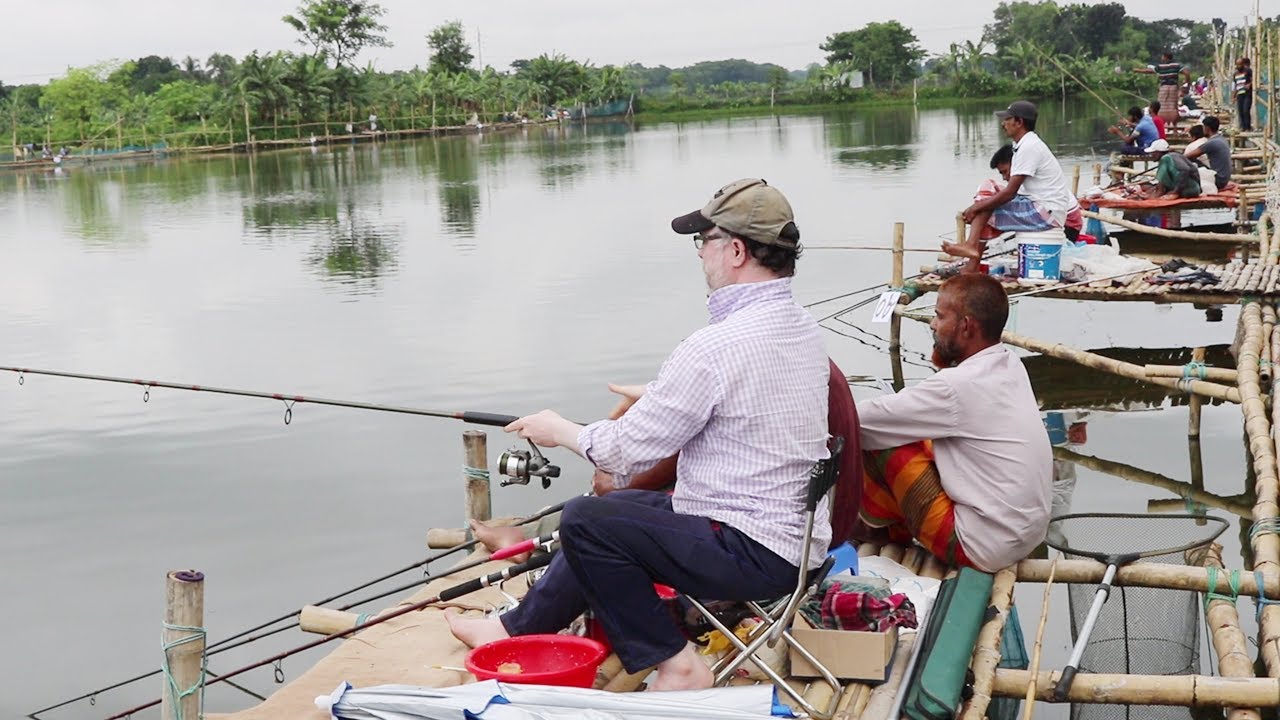
In recent years, many pond and gher owners across Bangladesh have begun opening their farms for recreational angling by organizing fishing competitions and sport fishing events. These events attract anglers from different regions of the country, who participate by purchasing entry tickets. Ticket prices typically range from BDT 1,000 to BDT 100,000, depending on the number of participants, prize pool, event format, and fish species available. Participants compete to catch trophy-sized fish, including carp, catfish, and other cultured species.
For farm owners, these events create new revenue streams beyond traditional fish production. Income is generated through ticket sales, sponsorships, food services, equipment rentals, and tourism-related activities. This business model helps diversify farm income while reducing financial risks associated with disease outbreaks, fluctuating fish prices, and natural disasters. At the same time, these competitions stimulate rural economies by creating opportunities for fishing guides, farm workers, food vendors, transport operators, bait and tackle suppliers, and tourism service providers.
Social media has become a powerful catalyst for this emerging sector. Anglers regularly share their catches, fishing experiences, bait preparation techniques, and competition highlights through Facebook groups and YouTube channels. Likewise, farm owners use digital platforms to promote their fishing venues and upcoming events. These online communities are helping to build awareness, connect enthusiasts, and expand the recreational angling culture throughout the country.
Globally, sport fishing has developed into a multi-billion-dollar industry driven by increasing interest in outdoor recreation and fishing as a lifestyle activity. The global sport fishing equipment market alone was valued at approximately USD 15 billion in 2024–2025 and is projected to reach between USD 18 billion and USD 21 billion by the early 2030s. The United States remains the world’s largest recreational fishing market, while China dominates global manufacturing by supplying around 80% of the world’s fishing equipment. Europe, particularly the United Kingdom, Germany, and France also represents a major recreational fishing market. Countries such as Australia, Norway, and Canada have built thriving marine sport fishing industries, while tourism-dependent nations including The Bahamas and Belize have successfully integrated sport fishing into their tourism economies, with international visitors accounting for 80-90% of recreational fishing catches in some destinations.
Bangladesh possesses many of the natural advantages needed to develop this sector. The country is blessed with extensive rivers, floodplains, wetlands, and a vast marine area that support around a hundred fish species with recreational angling potential. Research has also highlighted the opportunities for fisheries-based ecotourism, particularly in coastal destinations such as Saint Martin’s Island, where recreational fishing could generate employment and attract both domestic and international visitors. These findings are consistent with global experiences showing that well-managed sport fishing can become a significant contributor to local economic development.
Bangladesh has all the essential ingredients to build a sustainable sport fishing industry: abundant inland waters, rich fish biodiversity, a rapidly expanding aquaculture sector, and a growing community of recreational anglers. With appropriate regulatory frameworks, responsible catch-and-release practices where appropriate, environmental stewardship, and collaboration among government agencies, private farm owners, tourism operators, and the angling community, sport fishing could become an important new dimension of Bangladesh’s blue economy creating income, supporting rural livelihoods, promoting sustainable tourism, and strengthening the long-term value of the country’s fisheries and aquaculture sector.
Ali Arman Jobayer
Faculty of Fisheries, PSTU.
References
Research and Markets. Angling Equipment Market Report.
https://www.researchandmarkets.com/report/angling-equipment
Global Information, Inc. Sports Fishing Equipment Market Report.
https://www.giiresearch.com/report/go1768764-sports-fishing-equipment.html
FAO (2021). Fisheries and Aquaculture Sector Review: The Commonwealth of The Bahamas.
FAO AGRIS. Potential of Fisheries-Based Ecotourism in Bangladesh.
https://agris.fao.org/search/en/records/65df11d2b766d82b1800243b