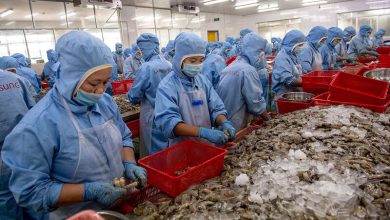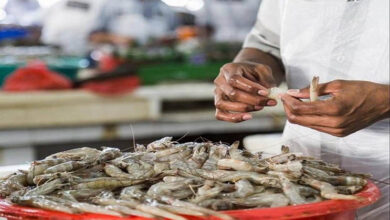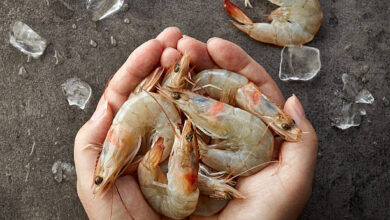
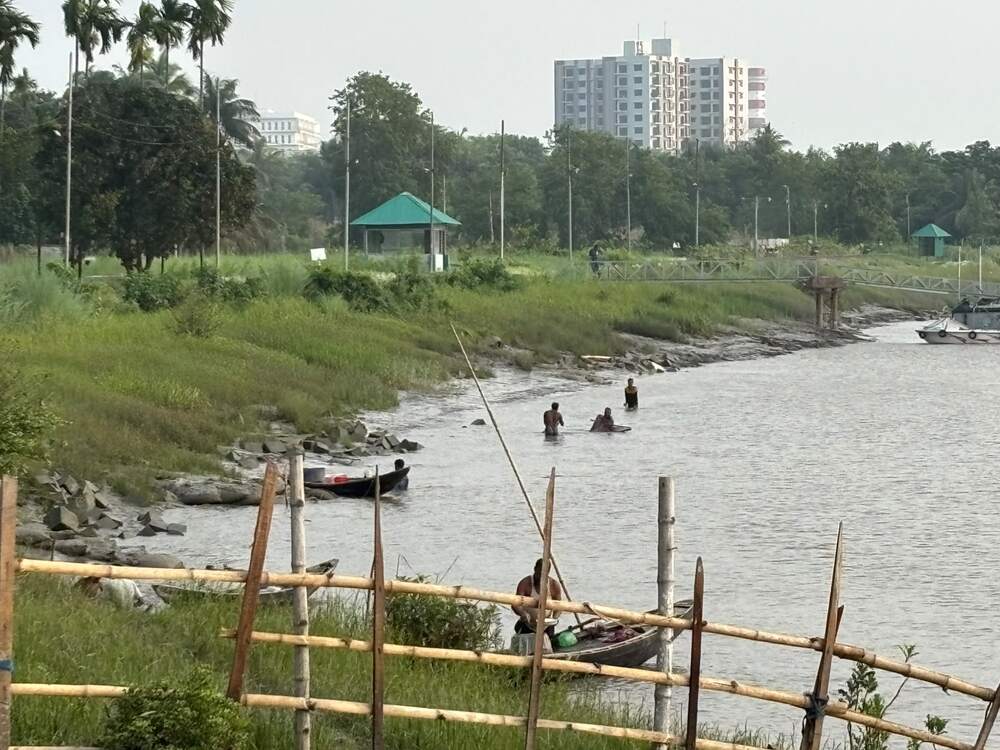
Bangladesh’s commercial aquaculture sector, especially the farming of giant freshwater prawn (Macrobrachium rosenbergii, locally known as Golda) and black tiger shrimp (Penaeus monodon, locally known as Bagda), has become one of the main pillars of the nation’s economy. It is also a main source of livelihood for millions of people. However, this huge industry is built upon a deeply ethically controversial foundation, which is widespread and largely unregulated collection of wild post-larvae (PL) from the country’s coastal and estuarine waters. This practice raises an important question: Is the continued collection and use of wild PL/fry for commercial aquaculture sustainable and ethically justifiable?
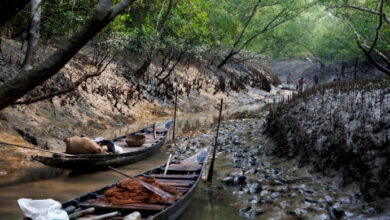
Wild PL collection is not a limited or marginal activity. It is a massive and informal industry embedded in the fabric of coastal Bangladesh. An estimated 400,000 people are directly engaged in fishing for prawn and shrimp post-larvae along the coastline. A significant number of women and children are involved in this activity. For these coastal communities, particularly in the southwest region, the income derived from this seasonal work is critical. Studies indicate that, on average, 40% of the total yearly income for these people comes from prawn larvae fishing activity.
The primary reasons for this practice’s existence is the huge demand from the aquaculture sector. Bangladesh has hundreds of thousands of shrimp and prawn ghers (large earthen enclosure or pond) or farms. These farms require billions of PL annually. For example, Fakirhat Upazila alone requires an estimated 426 million bagda and 746 million galda fry per year. On the other hand, hatchery production meets only a small fraction of this demand, which meets around 8% to 15% in some areas. Farmers and gher owners most of the time prefer wild fry because they are perceived to be more resilient, have higher survival rates and are of better quality.
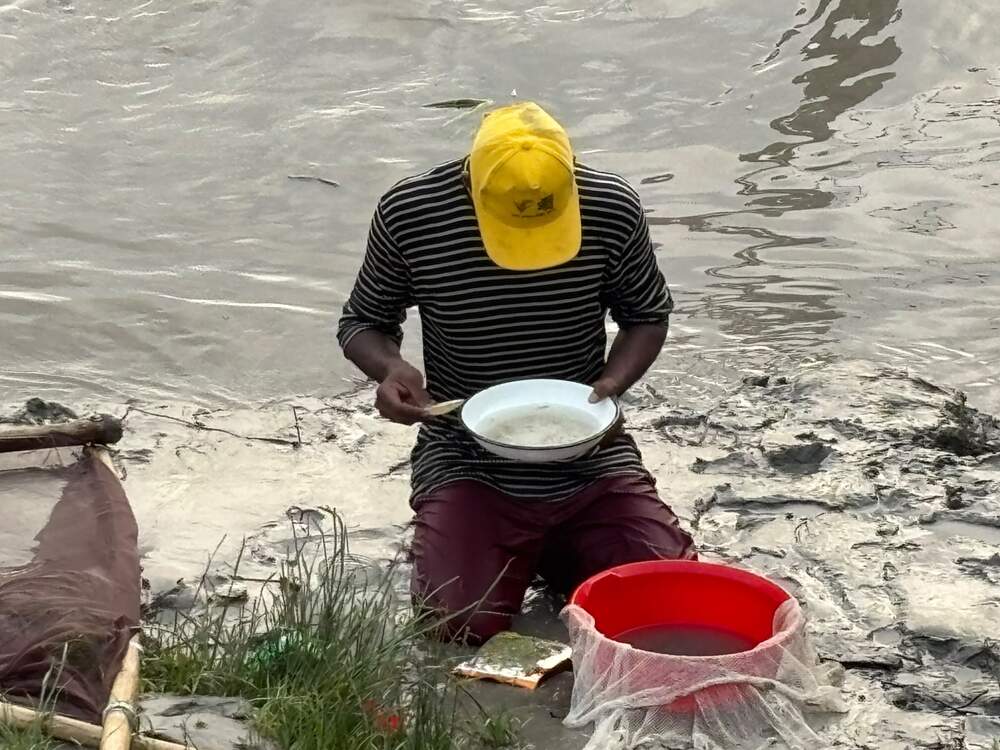
The ethical problem with wild PL collection is not merely the removal of juvenile fish and prawns from the wild stock but the catastrophic collateral damage it does on the entire coastal ecosystem. The primary method of collecting fry involves using ultra-fine mesh nets, which is locally known as Behundi Jal. It functions like mosquito nets, which indiscriminately trap virtually everything in their path.
Every single target prawn or shrimp seed accounts for only 0.25% to 0.27% of the total catch; while the major portion of the haul are thrown away on the beach flats or the tidal mudflats. This wasted by-catch contains huge amounts of juveniles of economic and non-commercial varieties of finfish and shellfish along with a bulk of planktons and other species (non-target species). Moreover some people also collect parshe fish fry for commercial aquaculture. According to the Khulna-based Paikgachha Brackishwater Centre under the Bangladesh Fisheries Research Institute (BFRI), the ecological cost is very high for parshe fry collection: for every single parshe fry collected in the Sundarbans, at least 119 shrimp larvae, 312 plankton organisms and 31 fish fry of other species are destroyed in the process.
A joint survey conducted by the FAO and Norway found that fish stocks in the Bay of Bengal have dropped by nearly 78% since 2018. Indiscriminate wild PL collection is a significant contributing factor for this loss. The indiscriminate collection of wild PL disrupts the aquatic food web by removing plankton and the larvae of many fish and invertebrate species, which reduce biodiversity and weaken ecosystem stability. At the same time, repeated dragging of fine-mesh nets damages coastal habitats, increases erosion and water turbidity. This action also uproots mangrove seedlings and degrades important nursery grounds for aquatic life.
In recognition of the fact that fry collection from nature may result in long term ecological destruction and stock depletion, in 2000 the government reportedly banned the collection of fry or post larvae of fish, shrimp and prawns of any kind, in any form and in any way in estuary and coastal waters. Despite the legal ban, enforcement has remained inconsistent. Poverty, limited livelihood alternatives, inadequate hatchery production and high market demand continue to encourage illegal collection. As a result, wild fry harvesting still occurs in many coastal areas, which highlights the gap between legislation and effective implementation.
The ethical dilemma of wild fry collection lies in balancing environmental conservation with the livelihoods of coastal communities who depends on fry collection. Expanding quality hatchery production facilities, providing alternative income opportunities for coastal communities and enforcing sustainable management can reduce dependence on wild fry. To ensure the long-term success of Bangladesh’s aquaculture industry, it requires protecting both its biodiversity and the people who depend on it.
Ali Arman Jobayer
Faculty of Fisheries, PSTU.