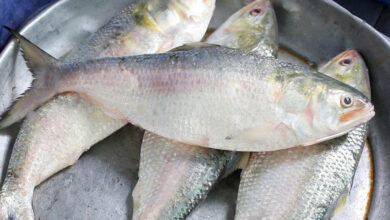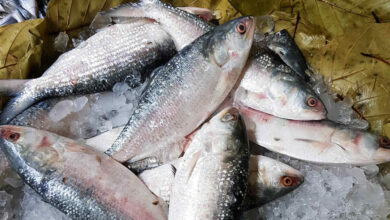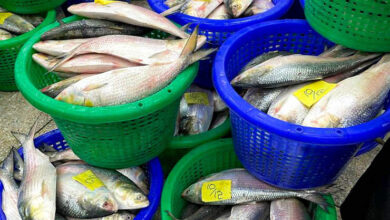
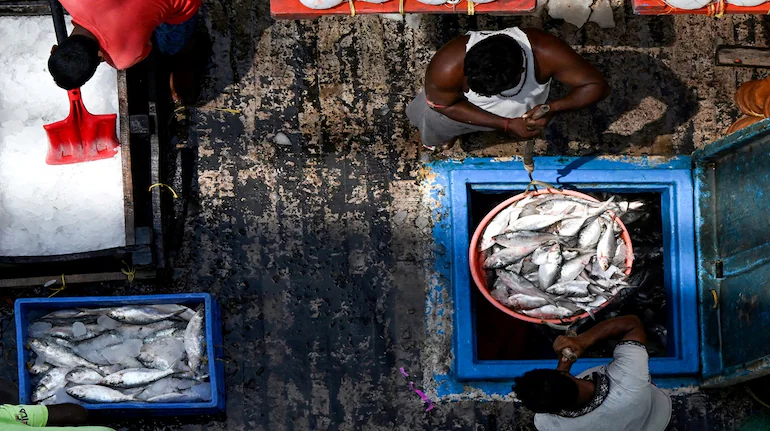
Bangladesh is unlikely to export hilsa to India ahead of this year’s Durga Puja, marking a significant break from the limited festive-season trade that has taken place in recent years.
The development comes at a time when the traditional hilsa trade between the two neighbouring countries has taken an unusual turn. In the past two months, around 500 tonnes of hilsa have reportedly been exported from India to Bangladesh, as lower domestic availability has increased demand for imported fish.
Indian fish traders had been expecting Bangladesh to open a limited export window for hilsa ahead of Durga Puja, as has happened in previous years. However, no such permission has been announced so far.
According to Indian traders cited by The Indian Express, Bangladesh also recently stopped hilsa imports, with permits reportedly cancelled through a circular issued on September 23. The traders said the timing has made it increasingly unlikely that Bangladeshi hilsa will reach Indian markets before the festival.
A reversal in the hilsa trade
The situation is particularly notable because Bangladesh has traditionally been the major source of hilsa for Indian consumers, especially in West Bengal during the Durga Puja season.
Bangladesh restricted commercial hilsa exports in 2012, but temporary permissions have been granted in recent years around Durga Puja. In 2025, the government approved 1,200 tonnes for export to India, although only a fraction of the approved volume was ultimately shipped.
This year, however, the direction of trade has temporarily reversed.
Indian consignments sent to Bangladesh have reportedly originated mainly from Gujarat, particularly the Bharuch region, with some supplies moving through West Bengal. Traders have attributed the increased imports to lower hilsa availability in Bangladesh.
Exporters had sought permission
Bangladeshi exporters had not given up on the possibility of supplying the Indian market this year.
Earlier in September, 18 Bangladeshi companies applied for permission to export hilsa to India ahead of Durga Puja. The Commerce Ministry subsequently sought an assessment from the Ministry of Fisheries and Livestock regarding domestic hilsa availability and demand before making a decision.
Indian fish importers had also approached the Bangladeshi authorities seeking permission to import hilsa for the festival.
The absence of an export decision by the end of September now leaves little time for exporters to complete procurement, processing, logistics and cross-border shipment before the Durga Puja season.
What it means for the regional hilsa market
The development highlights how changes in domestic production and availability can quickly reshape the hilsa trade between Bangladesh and India.
For decades, hilsa has been deeply embedded in the food culture of Bengal on both sides of the border. Yet the recent movement of Indian hilsa into Bangladesh, followed by the absence of a corresponding Bangladeshi export window to India, demonstrates a notable shift in regional supply dynamics.
Whether this represents only a temporary market reversal or a broader change in the regional hilsa trade will depend on future production, domestic demand, fisheries management and government trade policy in both countries.
For now, however, Indian consumers appear unlikely to have access to the usual seasonal supply of Bangladeshi hilsa during this year’s Durga Puja.